
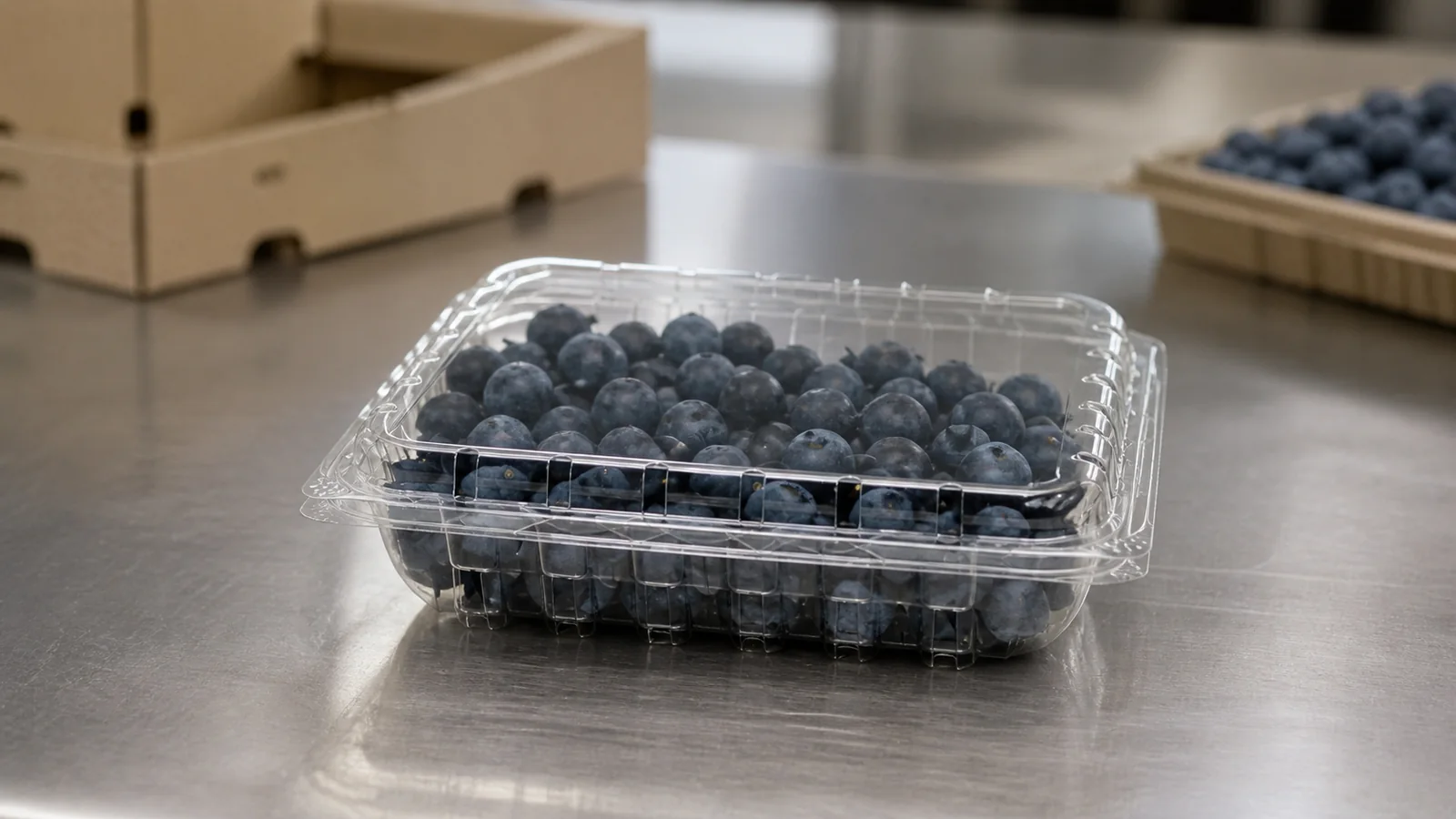
PET fruit clamshell packaging looks simple until a buyer has to make it work across packing, cooling, transport and retail display. The right choice connects the fruit, the cold chain, the carton and the required order volume.
Quick answer
What should a buyer confirm first?
Define the produce and variety, target pack weight, fruit dimensions, cooling route, carton interior size, destination and forecast volume before comparing container models.
01 · Application brief
Start with the produce, not the container catalog
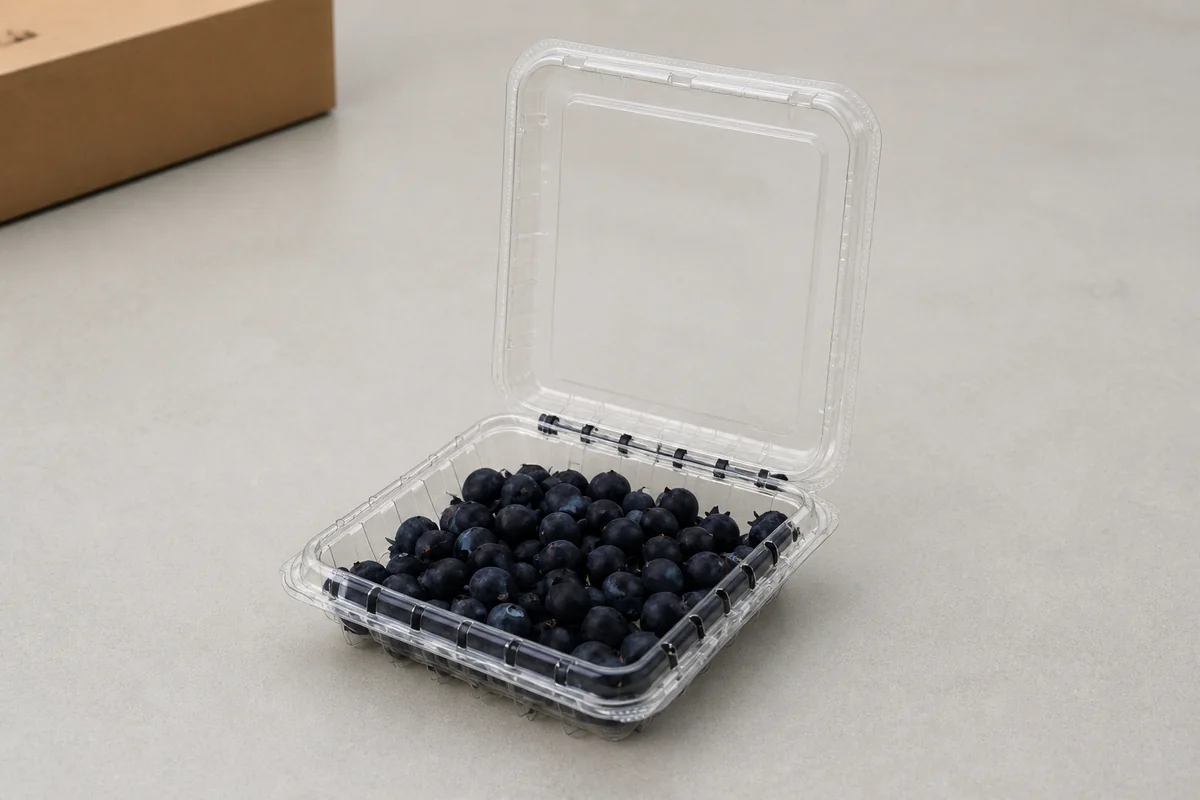
Two packs with the same target weight can require different internal space. Blueberries settle differently from grapes, while strawberries may be damaged when the lid leaves too little headspace.
02 · Size selection
Match the clamshell to pack weight and fruit geometry
Retail labels such as 125 g, 250 g, 500 g, pint or 1 lb are starting points, not universal container dimensions. Pack density changes with fruit type and size.
| Example model | Outside dimensions | Catalog use | Units / carton |
|---|---|---|---|
| YL-125G | 105 × 105 × 40 mm | Small blueberry pack | 1,000 |
| YL-250G | 135 × 115 × 64 mm | Cherries and tomatoes | 1,200 |
| YL-CM300B | 245 × 125 × 45 mm | 200–300 g strawberries | 600 sets |
Specification note. Catalog examples are starting points. Final suitability depends on the fruit, net weight, venting, material requirement and the customer’s carton.
03 · Cold-chain fit
Vent design must work with the entire cooling path
Vent openings influence airflow and drainage, but more holes are not automatically better. Review the clamshell, corrugated tray, labels, pallet pattern and forced-air direction as one system.
- Align clamshell vents with carton openings.
- Check whether labels or sleeves block airflow.
- Validate strength after venting.
- Record temperatures at multiple carton positions.
Review airflow as a connected path
The package should be evaluated inside the real carton and pallet pattern.
04 · Line performance
Check closure, hinge and de-nesting performance
A buyer should evaluate more than whether a lid closes once by hand. Test positive lock engagement, closing force, hinge durability, stack stability and resistance to accidental opening during handling.
“The lowest unit price can be offset by an inefficient case pack, packing-line rejects or poor container utilization.”
Ready for a fit review?
Send a complete packaging brief
Share produce type, target pack weight, fruit dimensions, carton size, cooling route, destination and forecast volume. We will compare available formats and identify the missing specifications.