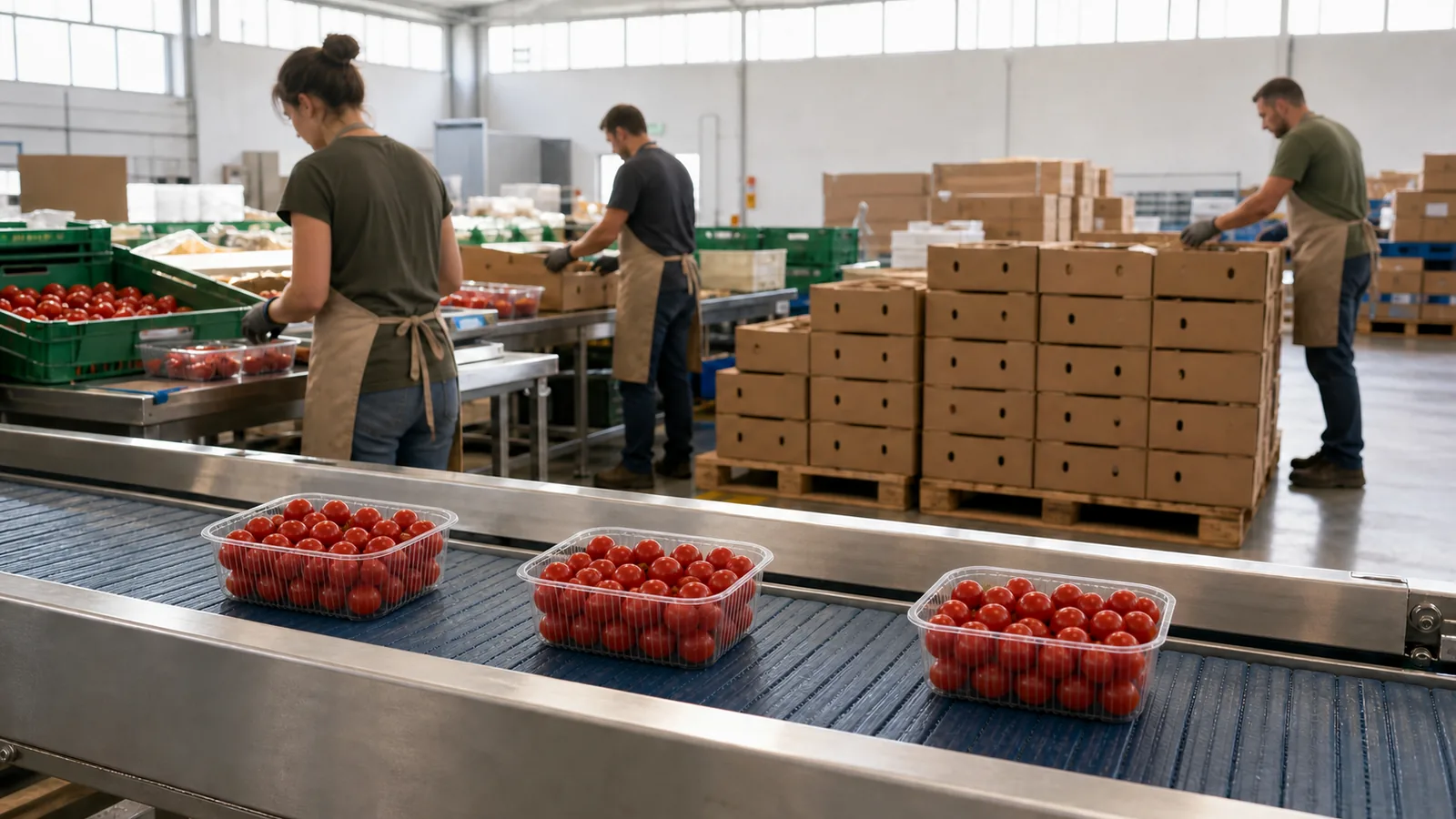
A plastic produce tray must work in two states: as a filled pack around the produce and as an empty nested item moving to the packing house. Both affect pack performance and logistics cost.
Quick answer
What should a buyer confirm first?
Define the produce range, target fill, packing method, outer carton and route before comparing tray dimensions. Then validate the complete filled pack with representative samples.
01 · Application brief
Start with the produce and packing method
Provide the smallest and largest produce dimensions expected across grades and seasons—not only an average. Include target net weight or piece count, maximum product height, shape variation and required headspace.
An open tray, a deep containment tray and a cavity-style insert solve different problems. If the tray sits inside an existing carton, include its internal dimensions, layer count and intended orientation. Treat a clamshell separately because it adds a lid, hinge and closure; use the PET fruit clamshell packaging guide when an integrated closure is required.
02 · Format comparison
Use stock formats as testable starting points
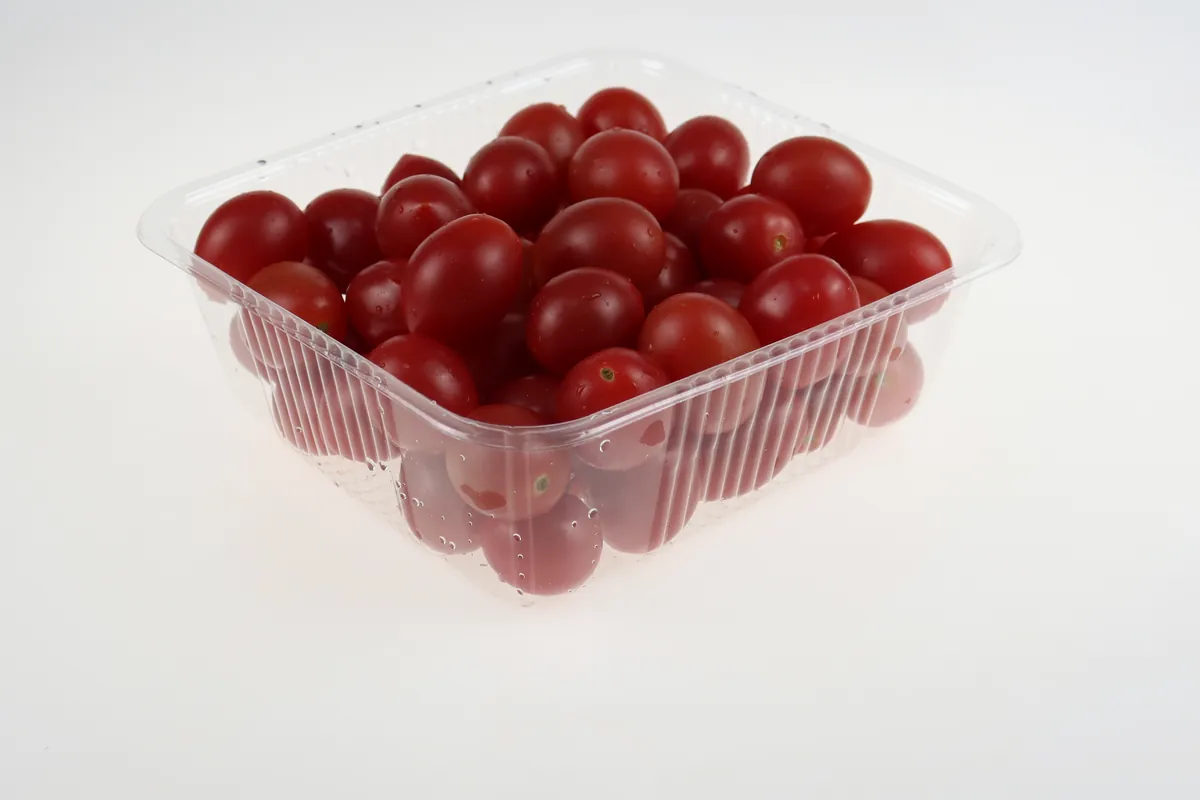
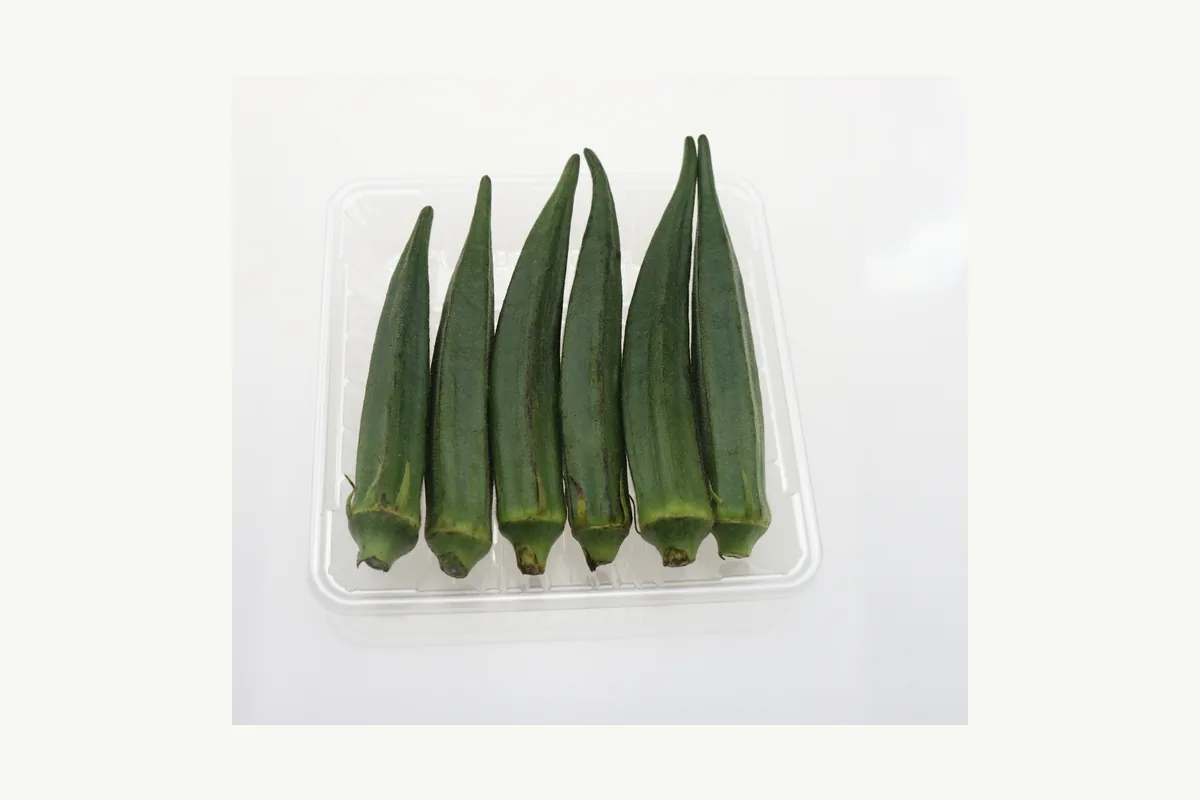
The three real product examples below show different footprints, depths and presentations. Each image is given enough space to show the complete tray; they illustrate format range, not crop recommendations. Buyers can also review the current plastic fresh produce tray overview before narrowing the sample brief.
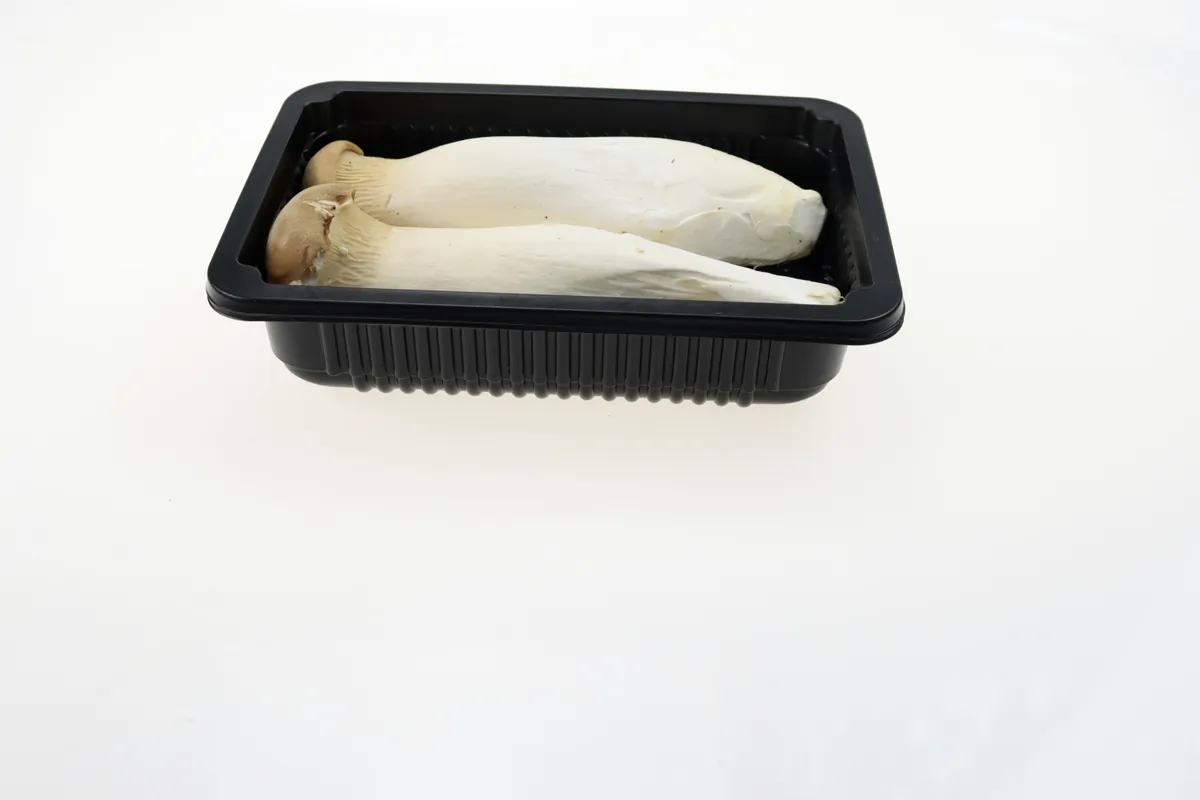
| Example model | Outside size (L × W × H) | Catalog count |
|---|---|---|
| YL-1414H2 | 130 × 130 × 20 mm | 3,200 / carton |
| YL-1610 | 158 × 98 × 25 mm | 1,200 / carton |
| YL-1818 | 180 × 180 × 30 mm | 1,200 / carton |
| YL-1713H5 | 178 × 130 × 50 mm | 1,200 / carton |
| YL-181765A | 185 × 165 × 60 mm | 1,200 / carton |
Specification note. Catalog figures are starting points. Confirm final material, color, dimensions, unit weight and carton quantity in the quotation and approved sample.
03 · Complete-pack review
Review the tray, outer pack and route as one system
Depth should limit unwanted movement without tightly compressing the produce. The rim must work with film, lids and the tray above. Vent or drainage openings need to align with the master carton and cooling path.
Transport research identifies vibration, impact, compression and packaging configuration as relevant factors. This supports testing the complete filled pack; it does not prove that one geometry or material protects every product or route.
- Check produce movement and pressure at the rim or sidewall.
- Review filled-tray deformation, film or lid fit and layer stability.
- Confirm material, color, tolerance, storage conditions and destination documents.
04 · Logistics math
Calculate empty trays and filled packs separately
To the packing house
Empty nested trays
Request nested stack height, trays per sleeve and carton, carton dimensions, gross weight, CBM and expected loading.
carton CBM ÷ trays per carton
Useful shipping-volume comparison per empty tray
To the buyer
Filled packs
Confirm trays per layer, layer count, filled-carton size and weight, headspace, compression, cooling and pallet stability.
Compare quotations only when material, dimensions, agreed unit weight or thickness, carton count, carton size and Incoterm are aligned. Inefficient nesting can offset a low unit price.
05 · Approval
Validate stock or custom formats through samples
Start with a stock tray when its internal space, rim, depth and footprint fit the produce and outer pack. Review a custom format when no stock option meets the footprint, cavity, vent, carton-utilization or equipment requirement.
- 01
Measure a representative produce range.
- 02
Pack the target weight or count using the normal process.
- 03
Apply the planned film, lid, bag and outer carton.
- 04
Stack the expected layers; review movement, pressure and deformation.
- 05
Record the approved model, material, dimensions, unit weight and test conditions.
When the route justifies it, add drop, vibration, compression or transport simulation under representative temperature conditions.
06 · Quality and quotation
Prepare one concise RFQ
Typical checks include material identification, outside dimensions and depth, unit weight or agreed thickness, forming completeness, rim and edge quality, color or clarity, vent condition, de-nesting, stack stability, count and carton labeling.
Commercial starting point: Yinling’s standard MOQ for thermoformed packaging is generally 500 cartons. Final MOQ, sample timing and lead time depend on the format, material, mold status, quantity, packing method and production schedule. EXW and FOB are the usual starting terms.
Discuss your pack
Match the tray to the produce, carton and route.
Send produce dimensions, target weight, packing method, destination and annual volume. Yinling can compare stock formats and advise whether custom development should be evaluated.