Diagnose the route before selecting the pack
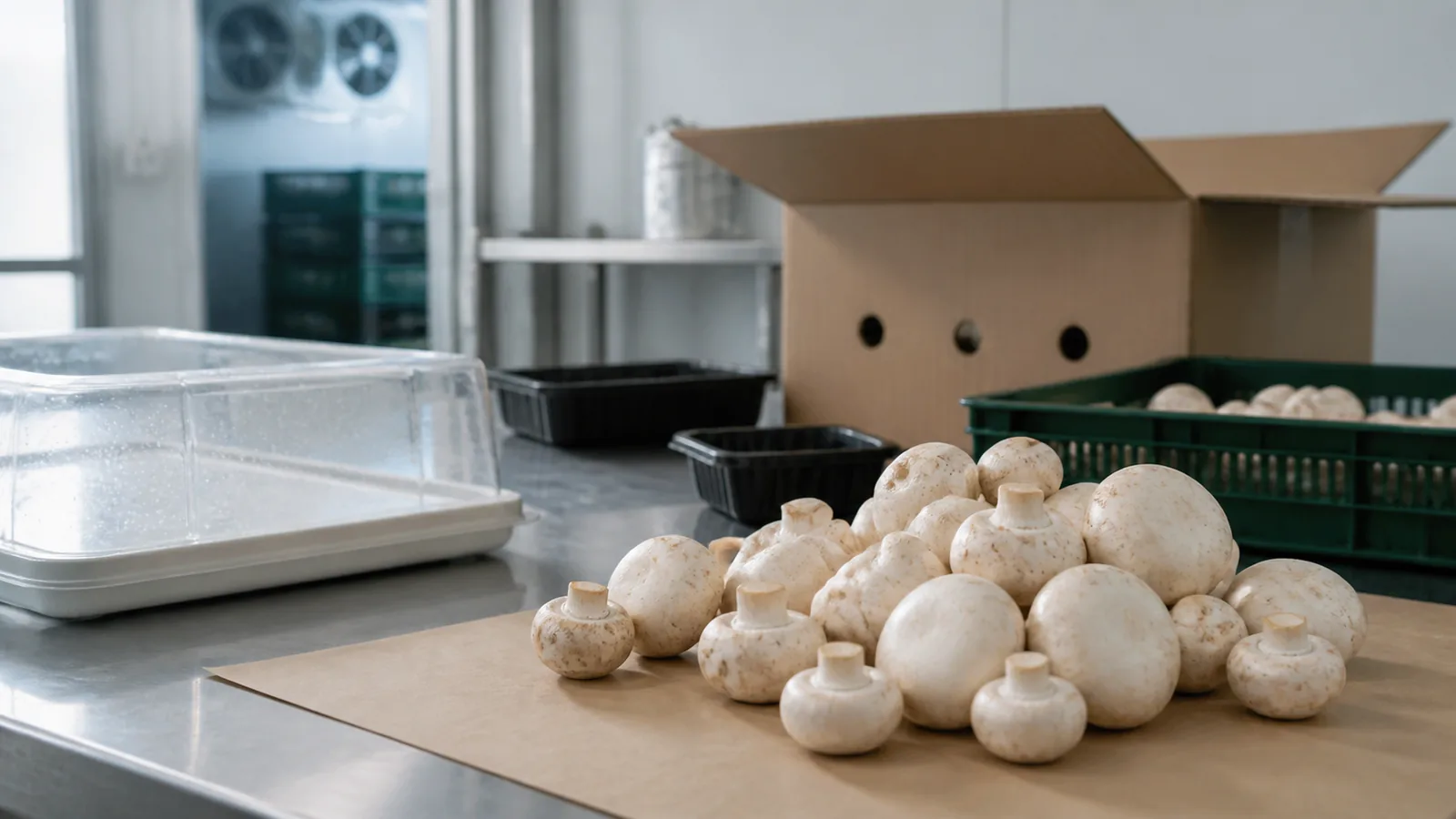
Fresh mushroom packaging has to manage several conditions at once. Moisture can collect inside the pack, ventilation can be blocked after cartoning, and a format that looks stable when empty can behave differently at full pack weight.
That is why “Which tray is best?” is usually too early a question. Start with the mushroom variety and size, target net weight, cooling method, storage duration, transport route and retail display. These details help narrow the choice between a tray with film or overwrap, a hinged clamshell, and other destination-specific formats.
One pack, three connected conditions
Tray with film or clamshell? Compare the trade-offs
There is no universal winner. The more useful comparison is which complete format fits the packing line, display plan and transport system with the fewest unresolved risks.
Tray + film or overwrap
Often considered when the buyer already has a suitable wrapping or sealing process and wants an open-top presentation before closure.
- Confirm film compatibility and sealing or wrapping method.
- Review perforation requirements for the destination market.
- Test whether the finished closure stays secure in handling.
Hinged clamshell
Useful when an integrated lid, faster manual closing or a self-contained retail pack supports the buyer's operation.
- Check latch engagement at the actual pack weight.
- Confirm headspace and product clearance under the lid.
- Review label area, vent path and carton count together.
For both formats, confirm material, dimensions and closure details against the destination's food-contact and labeling requirements. A supplier sample is a starting point, not final approval.
Review airflow through the filled pack and carton
Ventilation is a connected path. Openings on the tray or lid can become less effective when mushrooms, labels, adjacent packs or carton walls cover them. The review therefore needs to follow airflow from cooling equipment to the center of the loaded carton.
Destination rules matter as well. For example, Health Canada advises that plastic film used to package fresh mushrooms should be visibly perforated. This is a Canada-specific reference, not a universal specification, so buyers should confirm the requirements for each destination before approval.
Research on fresh mushroom packs also shows why single-variable claims are risky: humidity regulation can reduce some moisture effects without eliminating condensation in every tested condition. The practical response is to test the proposed pack through the buyer's actual route rather than promise a fixed shelf-life result.
Use a filled-pack test before bulk approval
A short, route-based test is more informative than comparing empty samples on a desk. Keep the product, pack weight and handling conditions consistent so that differences between formats can be reviewed clearly.
Give the supplier enough information to narrow the options
A focused RFQ helps the supplier recommend existing formats or identify where customization is necessary. It also prevents decisions from being based only on a product photo.
- Mushroom variety and seasonal size range
- Target net weight and headspace
- Preferred tray, film or clamshell format
- Cooling, storage and delivery route
- Carton dimensions, count and pallet plan
- Annual volume and order schedule
- Destination and required documentation
- Artwork, label area or color requirement
Yinling manufactures PET food trays and clamshells for produce applications. When you send the pack details above, our team can review format compatibility and sample options before a bulk quotation. For related planning, see our articles on fresh produce packaging selection, produce tray shipping and packaging for fruit packing houses.