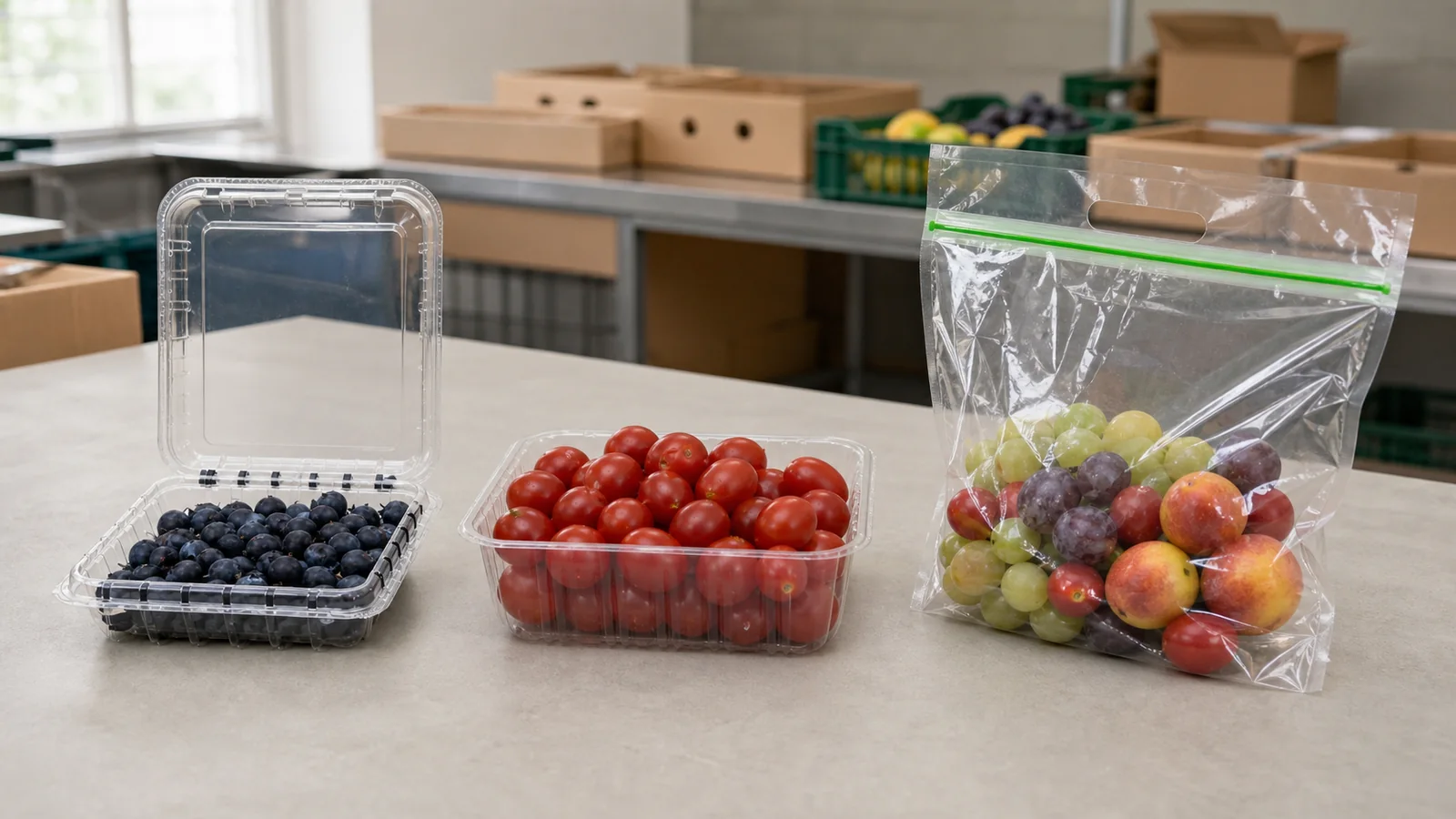
Choosing fresh produce packaging is not a contest between three materials or shapes. It is a decision about the produce, the packing operation, the distribution route and the way the pack must work at retail.
A rigid clamshell can add containment and display clarity. A tray can provide an open presentation or a base for a separately specified closure. A flexible bag can reduce empty-pack volume and suit products that do not need the same rigid protection. None is automatically the best option.
01 · Define the job
Describe the filled pack before choosing the format
The useful starting point is a short packaging brief—not an empty container selected from a photograph.
- Produce type, variety and seasonal size range
- Net weight or count, headspace and compression risk
- Cooling method, storage temperature and delivery time
- Packing steps, label area and retail presentation
- Master carton, case count and pallet plan
BRIEF
02 · Format decision
Match the structure to the job it must do
Rigid containment
Clamshell
Often considered when delicate or small produce needs a rigid perimeter, integrated closure and clear product view.
Open the clamshell buyer's guide →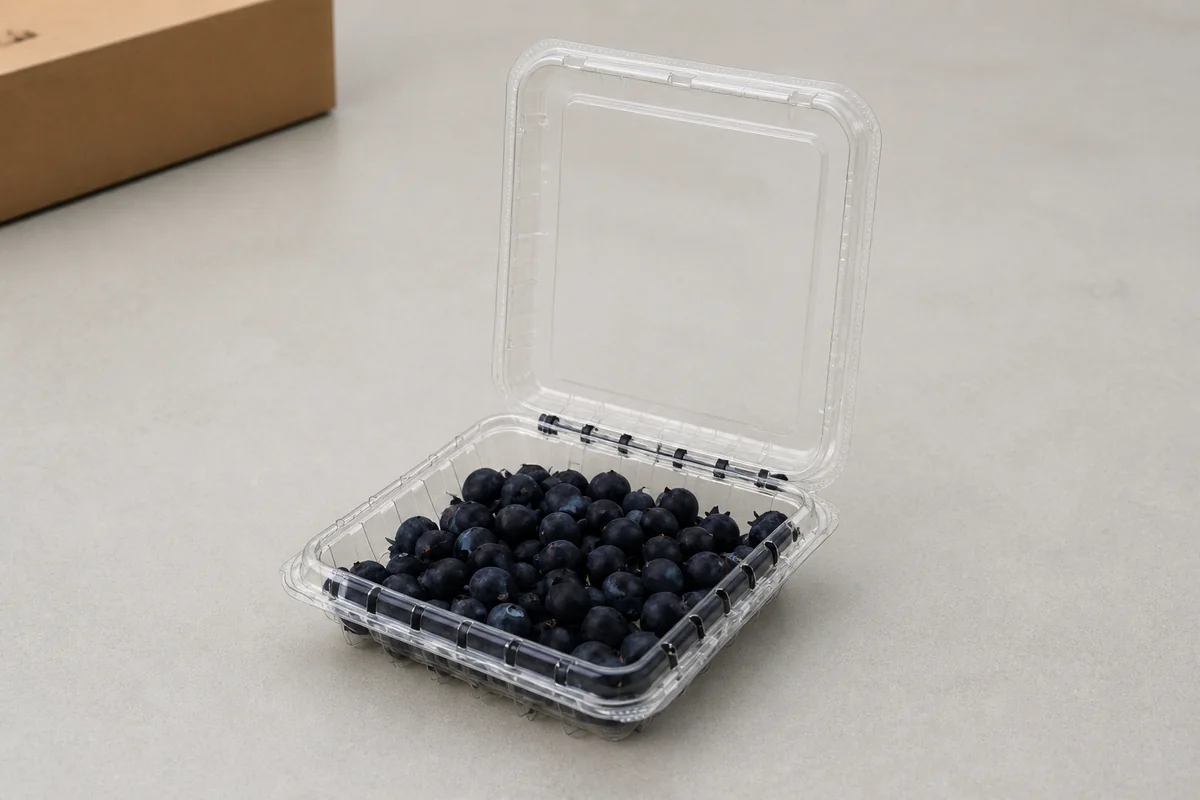
Base and display
Produce tray
Useful when footprint, depth and presentation lead the decision and the closure or overwrap is specified separately.
Review tray size and carton fit →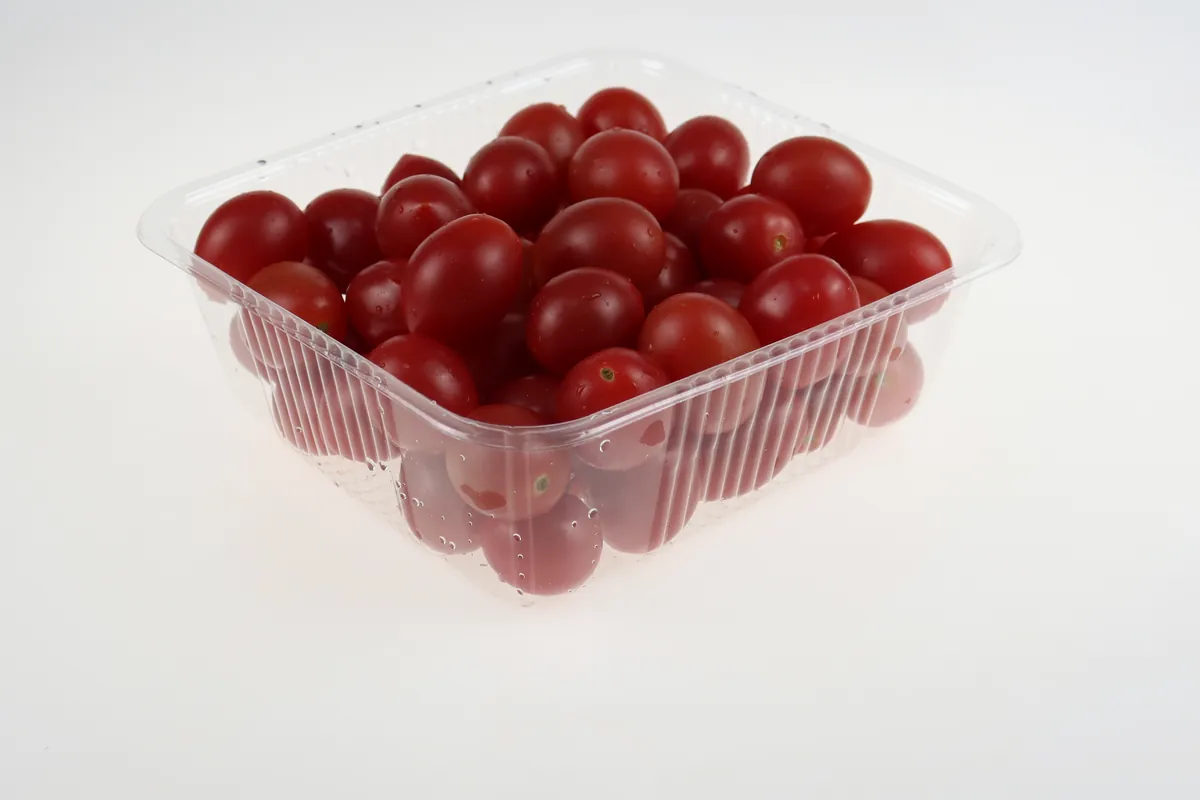
Flexible pack
Produce bag
Consider roll, flat or resealable formats where flexibility, dispensing or reclosure matters more than rigid protection.
Define primary-pack, pre-checkout or carrier use before quotation.03 · Packed system
Compare every option through the same five checkpoints
Airflow, pack stability and freight efficiency can change when containers or bags are tightly arranged inside the master carton. Review the filled case, not an isolated sample.
04 · Sample approval
Test the actual produce through the expected route
Review closure security, deformation, condensation, product movement and carton interaction. Record the approved sample version so the production structure can be matched later.
05 · Comparable RFQ
Send one brief that suppliers can price on the same basis
Include produce, pack weight, format, dimensions, vents, closure, label or print, annual or seasonal volume, destination, delivery window and master-carton requirements.
Yinling's standard MOQ for confirmed thermoformed programs is 500 cartons. Flexible-bag MOQ and lead time depend on construction, printing, packing and approval steps.