
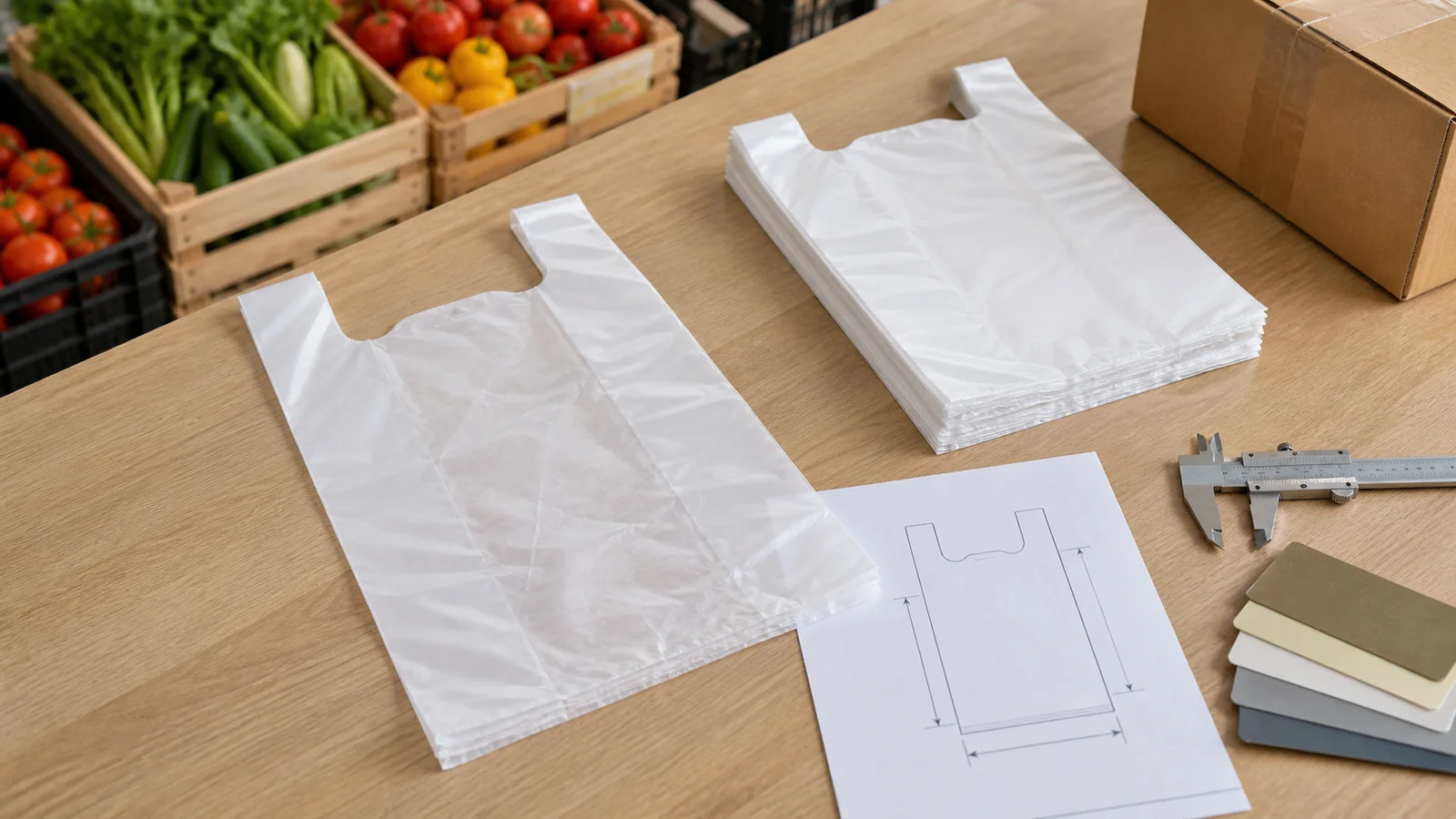
A useful quotation for custom printed plastic grocery bags starts with a measurable specification—not simply “a large bag with our logo.” Buyers need to align the format, usable size, film behavior, expected load, printing, packing and destination requirements.
01 · Market eligibility
Check where and how the bag will be used
Confirm the legal use case before selecting film or approving artwork. Checkout bags, pre-checkout produce bags and reusable bags can be treated differently—even within the same market.
- Destination country, state or province
- Checkout, pre-checkout, reusable or other retail use
- Thickness, recycled-content or material requirement
- Mandatory wording, marks, tests or documents
02 · Format and dimensions
Make every dimension unambiguous
T-shirt or vest bags are a common starting point for grocery programs. Produce roll bags, flat bags and die-cut handle bags serve different dispensing and presentation needs. Send a dimensioned drawing or physical reference sample rather than a single width and length.
Label the working geometry
Show whether gussets are included and identify target values versus permitted ranges.
If the project is for produce rolls, use the separate produce roll bag selection guide rather than combining two formats in one RFQ.
03 · Performance brief
Specify the use condition, not only the resin
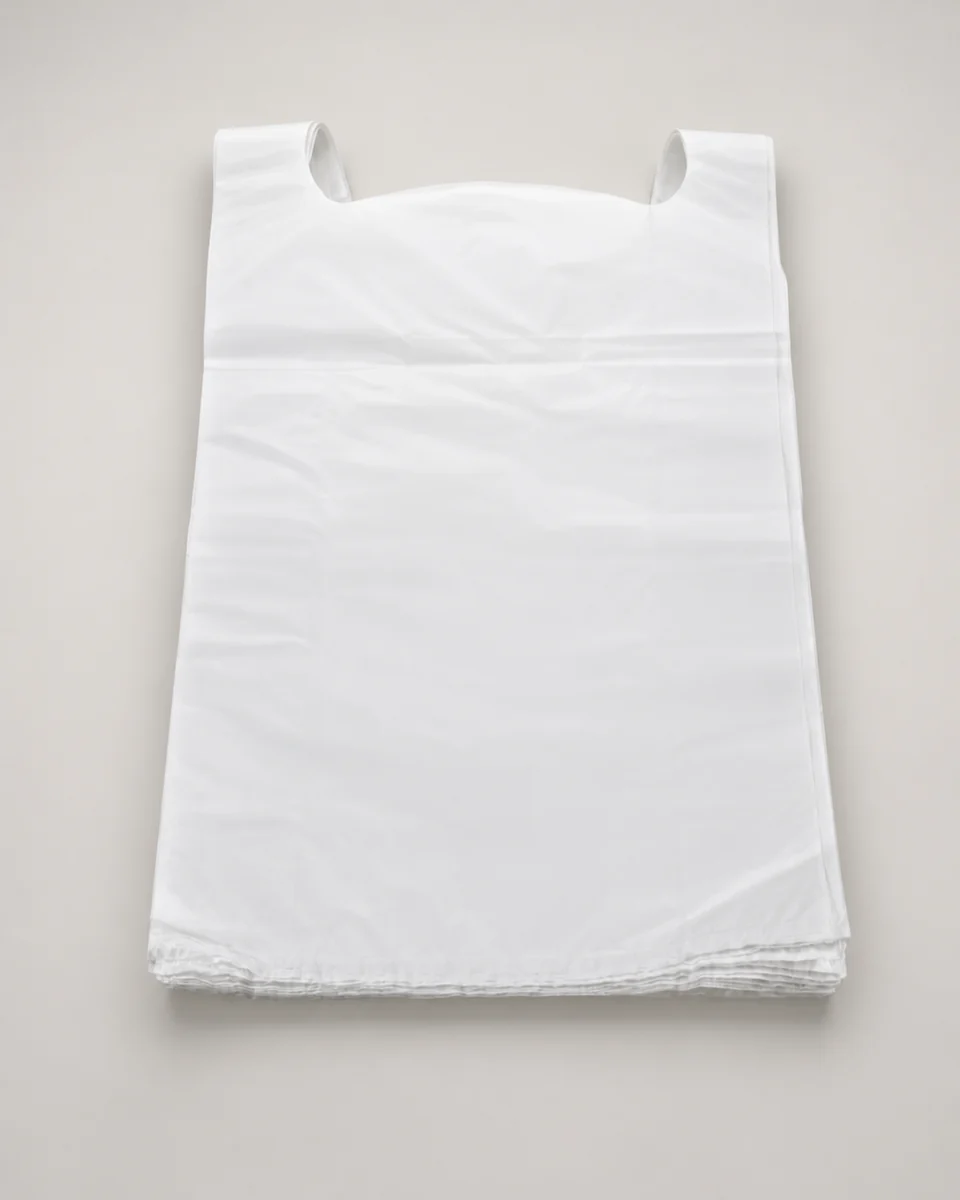
HDPE is often used for lightweight T-shirt bags with a crisper feel. LDPE is generally softer. LLDPE may be considered in a blend when flexibility or toughness needs adjustment. Final behavior also depends on grade, blend, gauge, bag geometry, extrusion settings and seal design.
Agree on the finished-bag test condition and pass criterion. An unqualified weight claim should not become a performance guarantee.
04 · Production inputs
Treat artwork and packing as part of the specification
“Print our logo” leaves important variables unresolved. Send vector artwork and define colors, sides, coverage, approved color references, print position and any mandatory marking.
- 01Layout proofDimensions, orientation and print area
- 02Appearance targetColor reference when accuracy is critical
- 03Retained sampleApproved reference for production checks
- 04Export packBag count, carton, marks and pallet request
Large solid areas, fine reversed text and multi-color registration can change setup, waste allowance and lead time. Packing must also specify bags per block, bundle or roll; packs per carton; carton size and gross weight; marks; and any pallet or moisture-protection request.
See how these inputs move through the plastic bag manufacturing process.
05 · Comparable quotation
Send one specification to every shortlisted supplier
A unit price is not comparable if material, gauge, bag count, carton volume or delivery term differs.
| RFQ group | What to define | Why it matters |
|---|---|---|
| Bag | Format, use, drawing, dimensions | Aligns geometry and dispensing |
| Film | Behavior, gauge, unit, tolerance | Aligns material use and feel |
| Artwork, colors, sides, coverage | Aligns setup and registration | |
| Pack | Block/roll count, carton, pallet | Aligns unit and freight comparison |
| Quality | Sample, test method, acceptance | Aligns inspection decisions |
| Commercial | Forecast, EXW or FOB basis | Aligns quotation scope |
A practical inspection plan checks dimensions, gauge, seals, handles, print registration, bag count, carton labeling and agreed load performance. Define acceptance criteria before production and retain an approved sample.
Ready for a specification review?
Send a production-ready bag brief
Include the bag format, destination, drawing, film, gauge, artwork, expected load, test request, packing, forecast volume and preferred EXW or FOB term.