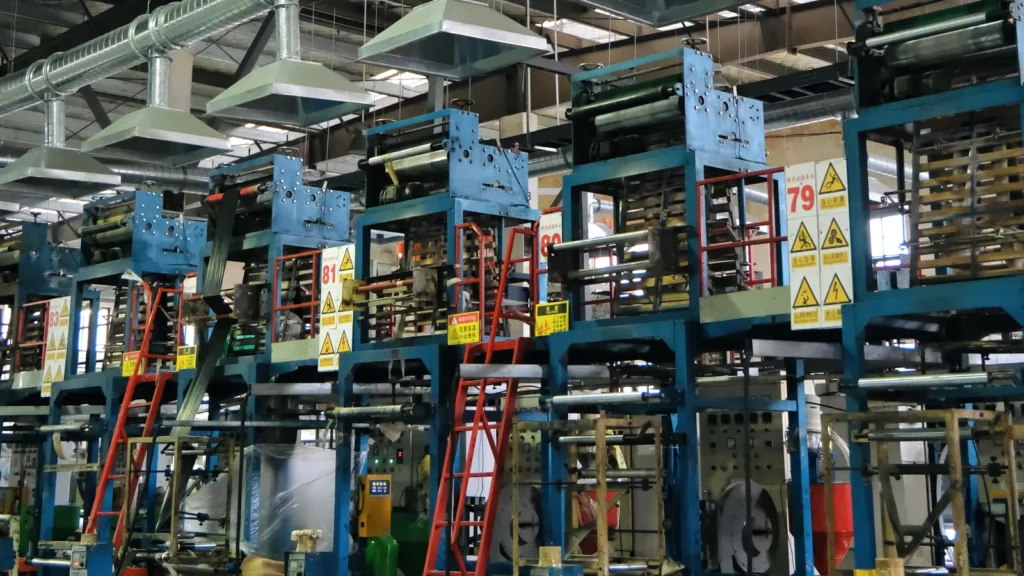
The plastic bag manufacturing process is not one machine producing a finished bag. It is a chain of handoffs—from an approved specification to film, print, converting, inspection and packing. For a bulk buyer, each handoff is a place to confirm that the order is still matching the agreed sample.
Quality starts with the specification, not the extrusion line
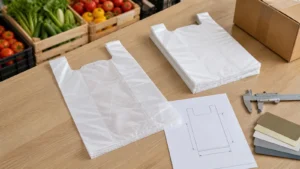
“A printed shopping bag” is not a complete production instruction. The factory must translate the buyer’s use case into a controlled set of details: bag style, open dimensions, gusset, handle format, film type, thickness, color, print position, packing method and intended load.
Small ambiguities at this point can become expensive differences later. For example, the same width can describe a flat bag or exclude the gusset; a logo can be centered on the artwork file but appear visually off-center after handle cutting; and a perforated roll can run correctly by hand but not on the customer’s dispenser.
- Bag style and opening direction
- Open size and gusset definition
- Material and thickness reference
- Handle, perforation or roll format
- Artwork, color reference and print area
- Units per pack, roll and carton
Freeze one written specification
Keep the drawing, approved artwork and physical sample aligned. If one changes, the others should be reviewed before production continues.
Dimensioned drawing · artwork proof · color reference · packing instruction · approved sample
Film, print and seals are one connected system
A bag can look acceptable and still cause trouble in use. Film consistency affects printing and sealing; print setup affects the usable converting area; and converting determines whether handles, perforations and seals work as intended.
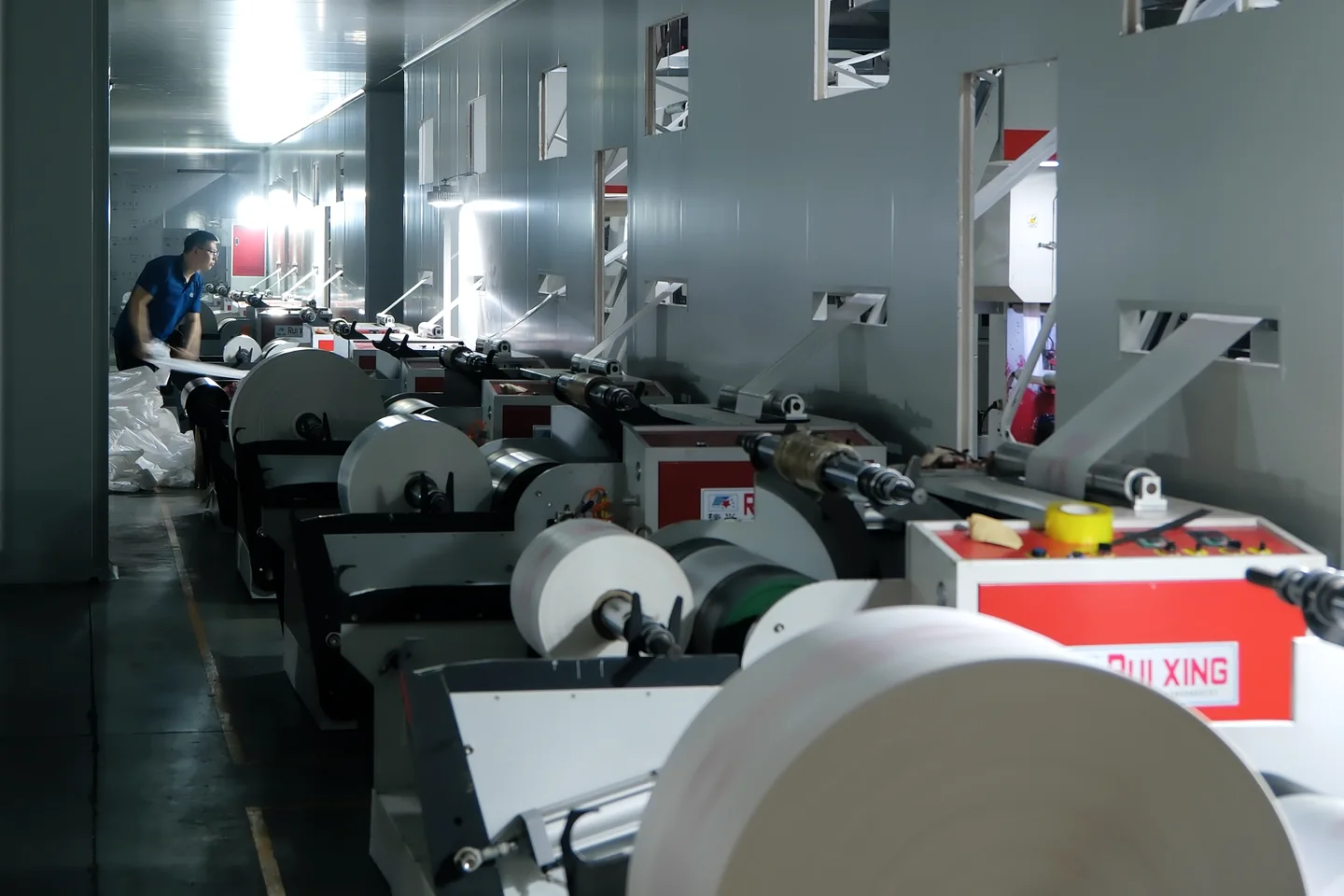
Control the film before adding print
In blown-film extrusion, prepared resin is melted and formed into continuous film, then cooled and wound. The exact formulation and operating settings depend on the bag’s application. What matters to the buyer is whether the finished film matches the approved reference for width, thickness, appearance, feel and winding quality.
A check made only at the end may miss variation along a long roll. In-process measurements and retained references make it easier to identify drift before the film reaches printing or converting.
Approve position and registration—not just the artwork file
Once artwork is confirmed, printing transfers the design onto the film. A digital proof can confirm spelling and layout, but it cannot by itself prove the final print position, registration or color appearance on the selected film.
For custom printed plastic shopping bags, review the print in relation to the bag’s handle, side gusset and seal areas. The production reference should state which face is printed, the intended orientation and any areas that must remain clear.
Cutting and sealing create the bag the customer actually uses
Converting turns printed or unprinted film into individual bags or bags on rolls. Depending on the design, this stage may include cutting, bottom or side sealing, handle punching, gusset formation, perforation, folding and roll winding.
This is where machine compatibility and everyday usability become visible. Seal continuity, tear-off behavior, handle position and roll direction should be checked against the agreed use—not treated as generic “pass or fail” features.
Match each production stage with practical evidence
| Stage | What can drift | What a buyer can confirm |
|---|---|---|
| Specification | Size interpretation, gusset, handle, roll direction or pack count | Dimensioned drawing, written pack plan and approved sample |
| Film | Width, thickness consistency, appearance, winding or feel | Agreed measurement method and production reference |
| Printing | Color appearance, registration, orientation or print position | Artwork approval plus a production print reference |
| Converting | Seal quality, handle position, perforation or roll winding | Functional samples tested in the intended handling method |
| Packing | Quantity, inner packing, carton marks or mixed variants | Pack-out photos, count plan and carton-label confirmation |
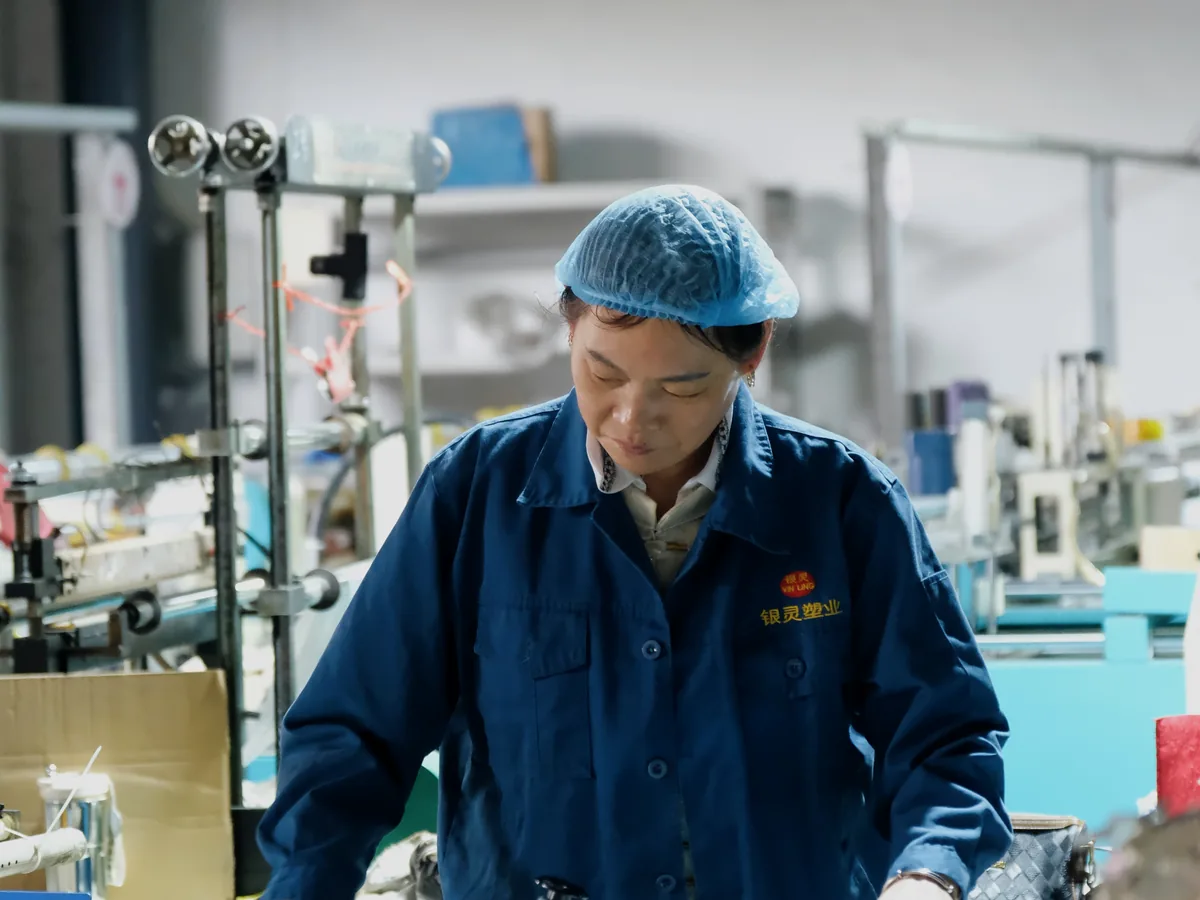
Inspect against the approved use, not appearance alone
Final appearance is only one part of bag quality. The inspection plan should focus on the features that matter to the order and use the same definitions that were agreed before production.
- Dimensions: use one agreed method for the bag body, gusset and handles.
- Print: check content, position, registration and acceptable visual range.
- Seals and handles: review consistency under an agreed handling or load condition.
- Perforation and rolls: confirm separation, direction and dispenser compatibility when applicable.
- Packing: verify unit counts, inner packs, carton quantities and marks.
Packing closes the production loop
Counting and packing are part of the manufacturing process because they determine how the bags arrive, how efficiently they are handled and whether different variants stay separated. The order should define units per bundle or roll, bundles or rolls per carton, carton marks and any label or pallet requirements.
For repeat orders, retain the approved specification, artwork version and packing plan. If the buyer changes a logo, thickness, material, handle or carton quantity, review the change as a new controlled revision rather than an informal note.
Confirm what changed—and what did not
A short revision summary helps purchasing, production and inspection teams work from the same version. It also prevents an artwork update from accidentally changing the bag construction or pack-out.
Send the use case before asking for a production quote
Yinling can review custom plastic shopping bag requirements for distributors, retailers, food businesses and other bulk buyers. Bag MOQ and lead time depend on the construction, dimensions, printing and packing details, so they should be confirmed against the actual specification.
- Bag type and open size
- Material and thickness
- Intended use and load
- Artwork and print colors
- Annual or order quantity
- Packing and destination
Have a bag sample or drawing?
Share photos, measurements, artwork and how the bag will be used. We can help organize the details that need confirmation before sampling or production.