How to Choose the Right Packaging for Fresh Produce

Learn how to select fresh produce packaging based on protection, ventilation, transportation, retail display, and cost.
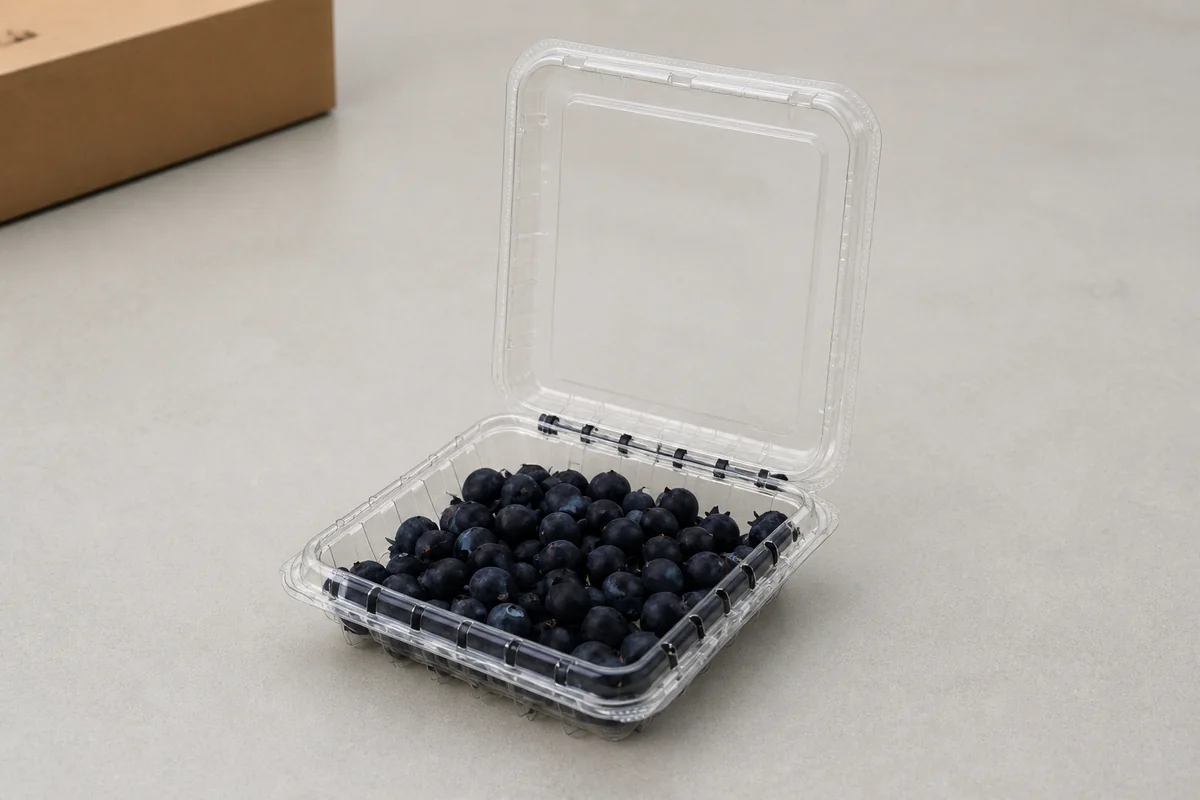
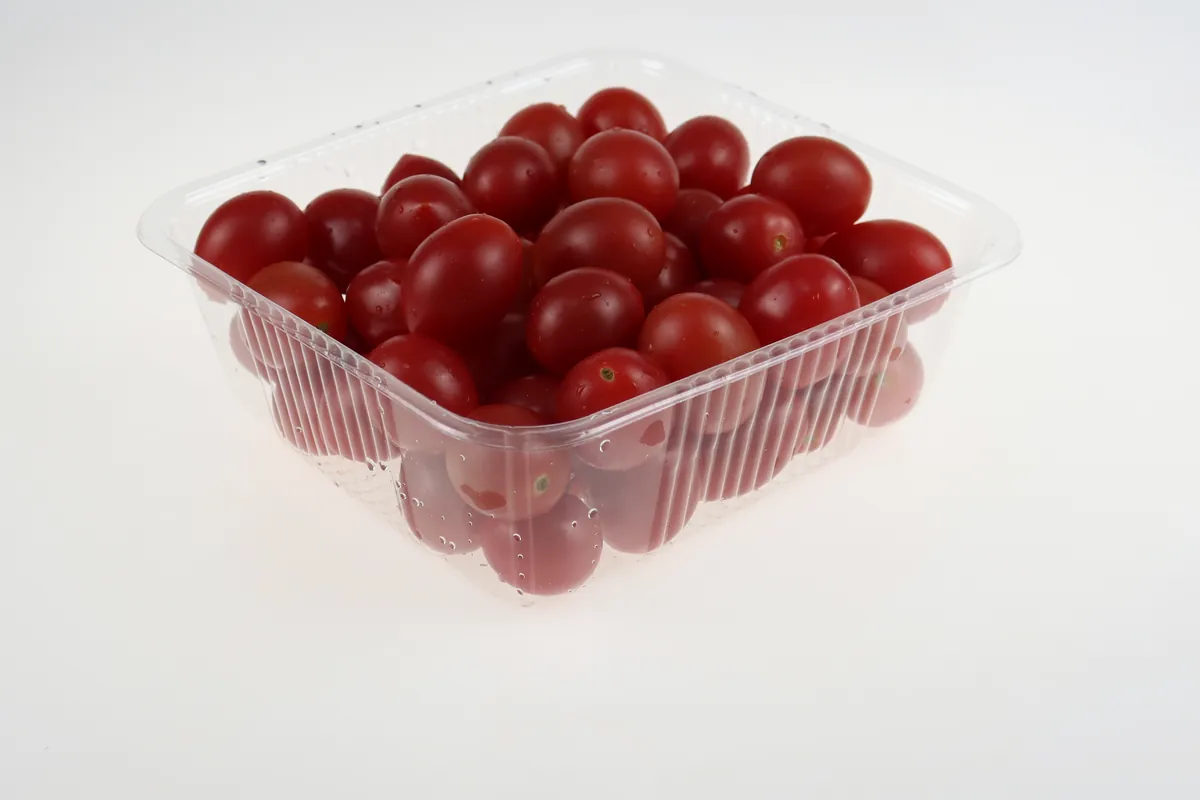
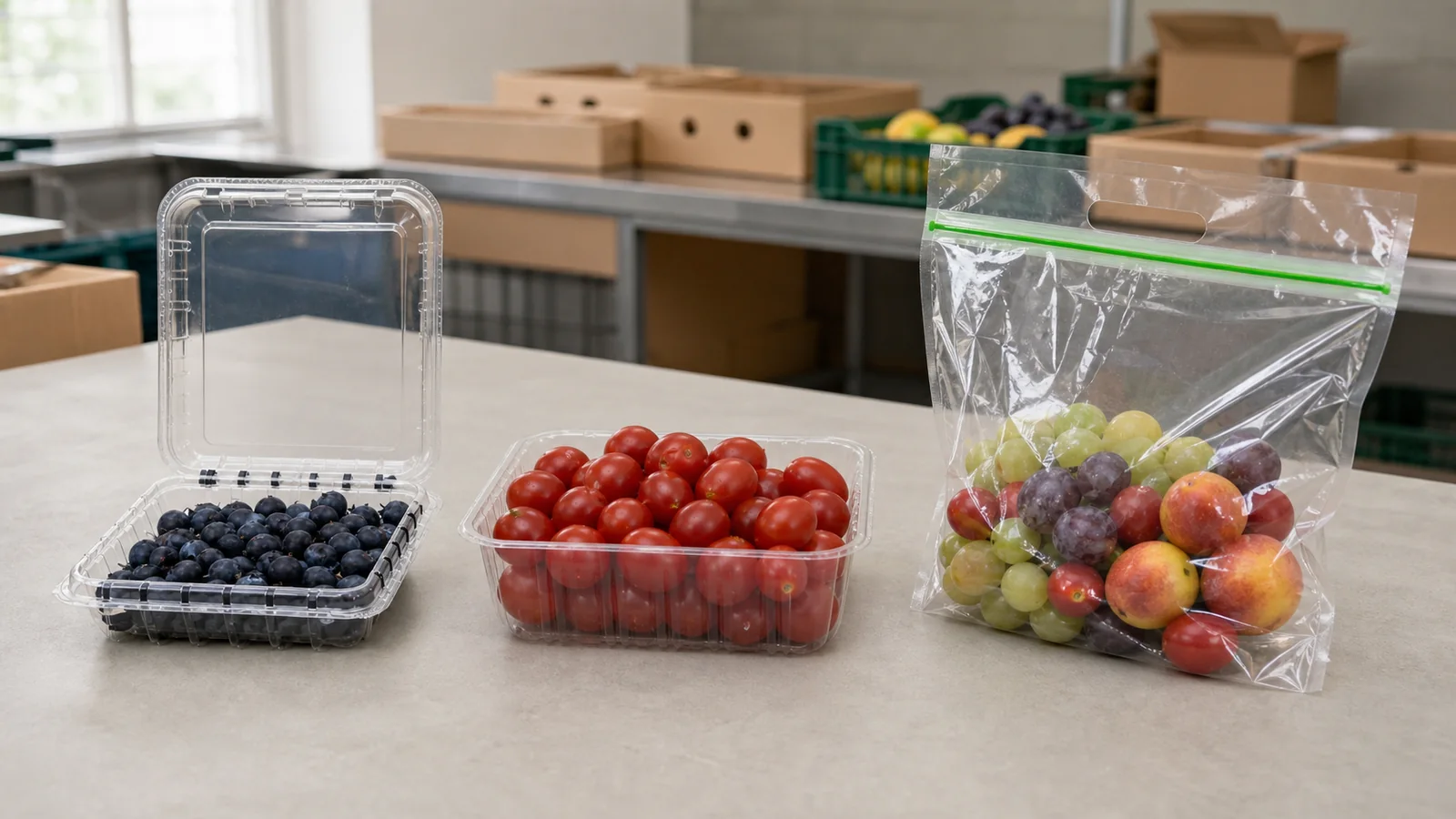
PET clamshell packaging for strawberries, blueberries, grapes, cherry tomatoes, and mushrooms

A strawberry can look perfect when it leaves the farm and still arrive at the supermarket bruised, damp, or leaking. In many cases, the problem is not the fruit itself—it is the packaging.

Fresh produce packaging has to do several jobs at once. It must protect delicate products during transport, allow enough airflow, fit efficiently into shipping cartons, and present the produce clearly on the shelf. The cheapest container is therefore not always the most economical choice. If it leads to damaged fruit, rejected deliveries, or unnecessary food waste, the real cost can be much higher.

So, how do you choose the right packaging?

Start With the Produce, Not the Container

There is no single package that works equally well for every type of fruit or vegetable.

Strawberries and blueberries need rigid packaging because they bruise easily. Grapes need enough space to avoid compression, while cherry tomatoes require a secure container that will not open during handling. Mushrooms present a different challenge: excessive moisture can quickly affect their appearance and shelf life.

Before comparing container designs, consider four basic questions:

  • How easily is the product bruised or crushed?
  • How much moisture does it release?
  • How long will it remain in storage or transportation?
  • Will it be sold by weight, count, or fixed pack size?

These details help determine the appropriate material, container shape, ventilation pattern, and closure.

Why PET Clamshell Packaging Is So Widely Used

Clear PET clamshell containers are a familiar sight in supermarket produce departments, and for good reason. They provide good product visibility while offering more protection than a flexible bag or open tray.

For shoppers, clear packaging makes it easy to check the color, size, and condition of the produce. For retailers, the rigid structure supports stacking and creates a consistent shelf display. A properly designed hinged lid also reduces the risk of accidental opening during transportation.

PET containers can be produced in different depths, capacities, and ventilation configurations. They are commonly used for strawberries, blueberries, grapes, cherries, cherry tomatoes, and other fresh products.

However, the material alone does not guarantee good performance. Container strength, wall thickness, hinge quality, and closure design all matter.

Ventilation Requires the Right Balance

Fresh produce continues to respire after harvesting. Without suitable airflow, heat and moisture can build up inside the package, causing condensation and accelerating deterioration.

Adding more holes is not necessarily the answer. Too much ventilation may cause some products to lose moisture and appear dry. Too little can create a humid environment that encourages spoilage.

The most effective ventilation pattern depends on the produce, pack weight, storage temperature, cold-chain conditions, and delivery time. For custom projects, testing the package with the actual product is far more reliable than selecting a design based only on appearance.

Think About the Entire Journey

A fruit container must work beyond the supermarket shelf.

It may pass through a packing facility, cold storage, trucks, distribution centers, and several rounds of manual handling before reaching the customer. During that journey, containers are stacked, moved, and exposed to vibration and temperature changes.

Check whether the packaging maintains its shape under load and whether the lid remains closed when the container is full. It should also fit efficiently inside the master carton. Even a small amount of unused carton space can increase storage and freight costs across a large order.

Buyers planning an export program should test filled samples under realistic transportation conditions before confirming mass production.

Do Not Ignore the Retail Experience

Protection is essential, but presentation also influences purchasing decisions.

A clear container should display the produce without distracting reflections, cloudy material, or unnecessary structural details. The label area must be large enough for branding, barcodes, traceability information, and local regulatory requirements without hiding too much of the product.

Easy opening matters as well. A closure that is too loose may fail during transport, while one that is too tight can frustrate customers or damage the container when opened.

Good packaging feels simple because the difficult decisions have already been solved during development.

Finding the Right Manufacturing Partner

When comparing suppliers, look beyond the unit price. Ask about material options, tooling, samples, minimum order quantities, quality control, production lead times, and export packaging. A capable manufacturer should be able to explain why a particular design suits your product—not simply offer the closest item in its catalog.

Founded in 2007, Yinling Plastic Industry manufactures PET fruit containers, clamshell packaging, food trays, and flexible plastic packaging for customers worldwide. With more than 300 production machines and over 100 automated production lines, we support both standard orders and customized OEM and ODM projects.

If you are developing packaging for berries, grapes, cherry tomatoes, mushrooms, or other fresh produce, contact Yinling to discuss your product, pack weight, container dimensions, destination market, and delivery requirements.

More articles

Contact us

Online Inquiry

Please fill out the form below, and we will contact you within 24 hours. All information will be kept strictly confidential.