What Actually Sets a Custom Packaging Lead Time?
A custom packaging lead time is not one factory number. It is a chain of decisions: the specification must be complete, the sample must be approved, materials and production must be scheduled, and finished goods must pass inspection before dispatch.
Define the event that starts the lead time
A quotation can describe timing from inquiry, deposit, confirmed specification, approved artwork or approved sample. These starting points are not interchangeable. If buyer and supplier count from different events, the project appears late before production has even started.
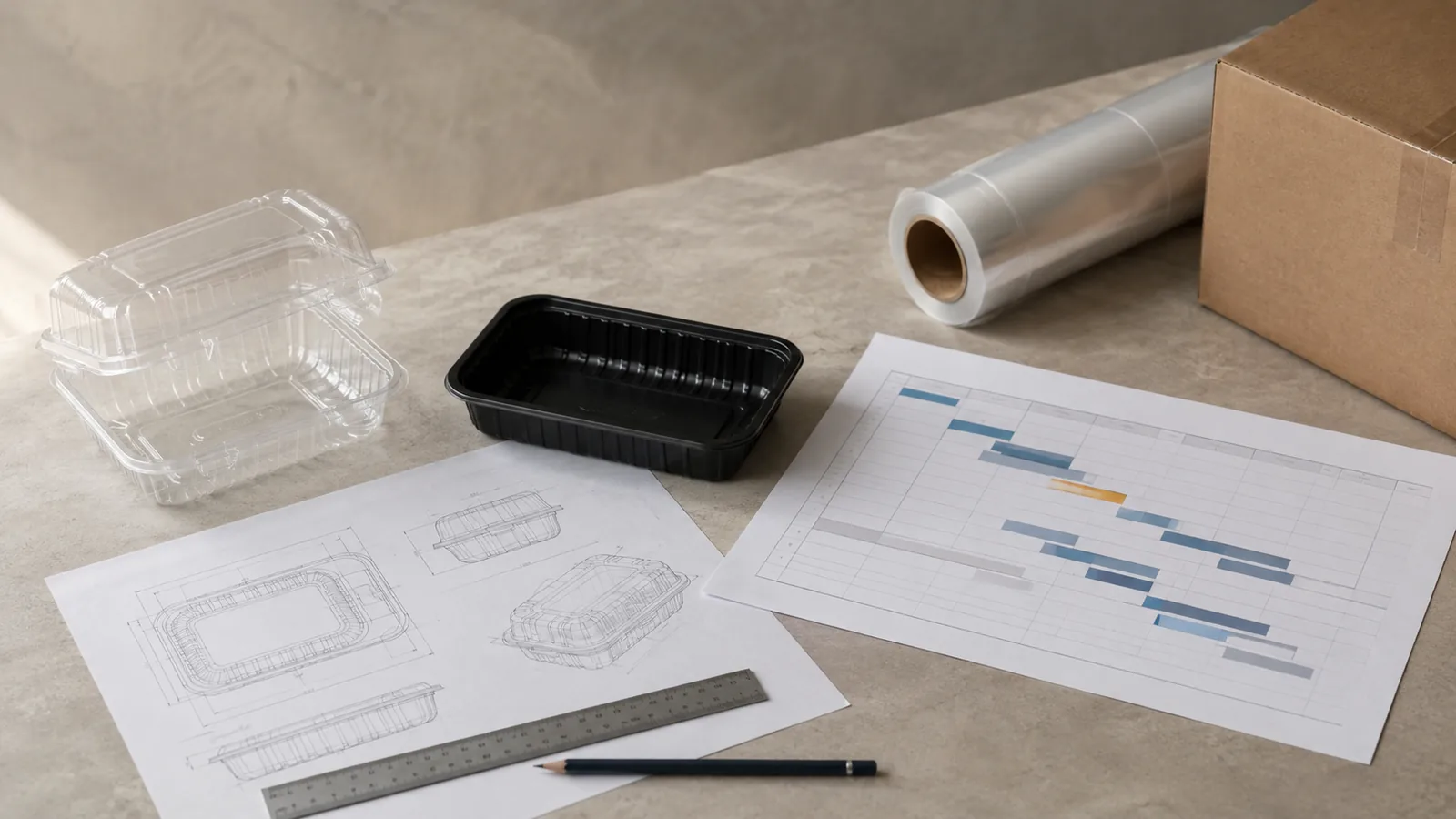
For a new thermoformed container, the schedule may include drawing review, mold development and filled-pack sampling. A repeat catalog item may avoid those steps if the approved specification and production tooling remain unchanged. Printed bags add artwork, print setup and color approval. The quoted schedule should reflect the actual route.
- Write the exact approval or payment event that releases the next stage.
- Separate estimated development time from confirmed production time.
- State whether the final date means goods ready, dispatched or delivered.
Plan five approval gates before promising a launch date
The longest stage is not always the main risk. A short approval that blocks every downstream action can control the whole schedule.
Small changes can restart a downstream task
Not every revision delays the order, but a change made after release can affect more than the item being edited. The safest response is to identify which approved input changed, which work must be repeated and whether the dispatch date moves.
Standard and custom orders need different calendars
Existing format
A current mold or established bag specification can shorten development, but only if the application and packing requirements still fit.
- Confirm current specification and availability
- Check actual product and carton fit
- Reserve material and production capacity
- Agree inspection and dispatch requirements
New or modified format
Structural, material or printing changes add controlled approval steps before mass production can be released.
- Freeze the application brief
- Review drawing, tooling or print preparation
- Approve representative samples
- Release the final production specification
Protect the schedule at each handoff
Fast replies help, but clear approval ownership matters more. Decide who can approve structure, artwork, samples and shipment release before the project begins.
- Ask for milestones. Request separate estimates for design, tooling or print setup, sampling, production, inspection and dispatch.
- Name the approver. Record who signs off each input and the latest decision date that protects the target shipment.
- Freeze approved references. Link the current drawing, artwork, sample and packing instruction to the purchase order.
- Record actual timing. After the first shipment, replace planning assumptions with real approval, production and transit data for reorders.
Give the supplier enough information to work backward
Yinling can review catalog and custom food-packaging projects, including thermoformed produce containers, food trays and printed plastic bags. Final lead time depends on the approved specification, tooling or printing needs, quantity, material readiness and production schedule.
- Packaging format and application
- Dimensions, material and quantity
- Artwork and sample status
- Carton and packing requirements
- Destination and Incoterm
- Required arrival or dispatch date
Have a target launch date?
Share the required destination date and current approval status. Yinling can identify the remaining stages and confirm which timing can be quoted.
Discuss your packaging schedule