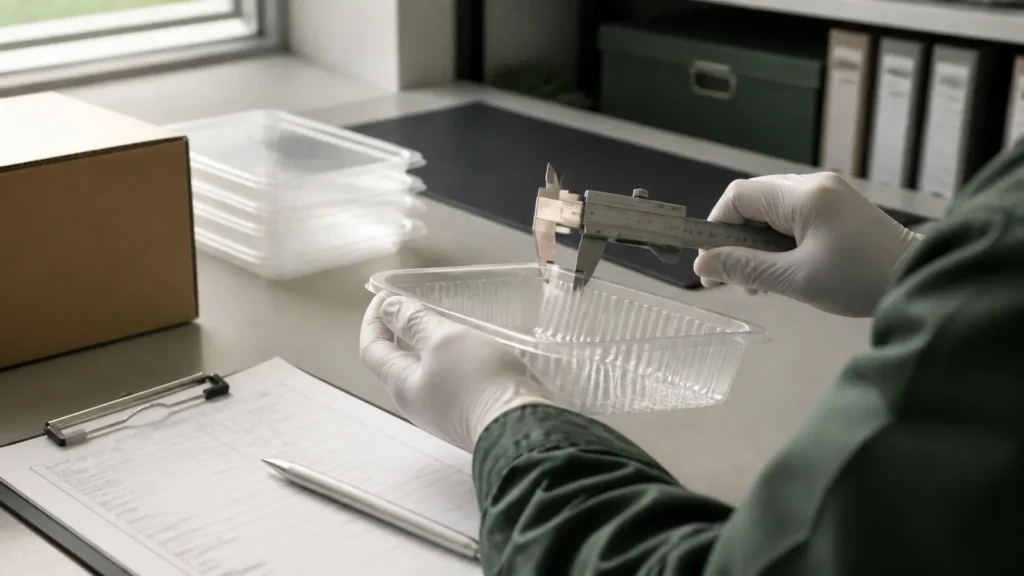
A useful food packaging quality-control plan turns “good quality” into agreed specifications, inspection points and evidence that a buyer can review before release.
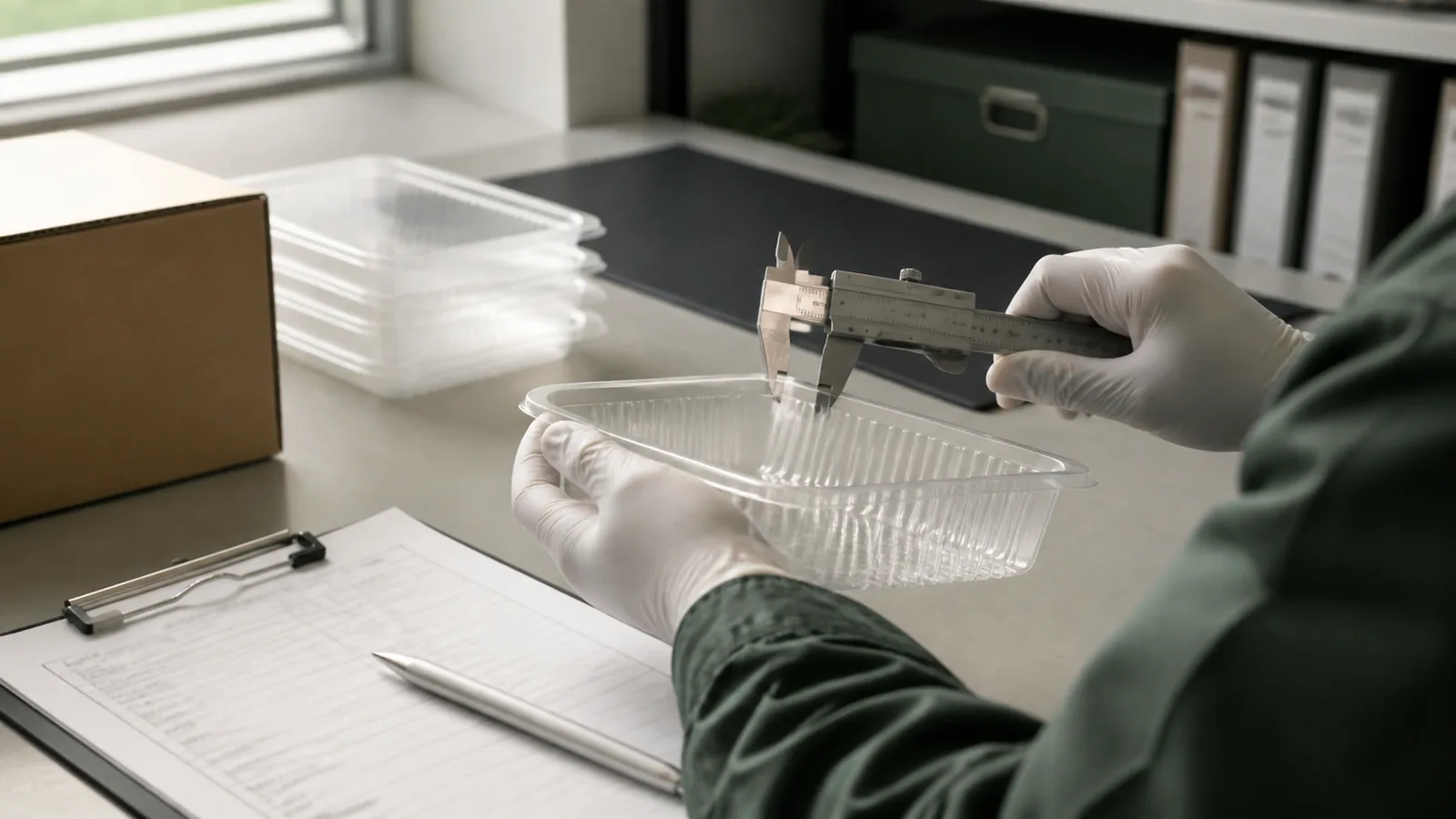
Start quality control before production
Before a supplier can inspect a shipment, the buyer and supplier need one approved reference. Define the product drawing or dimensions, material, appearance, functional requirements, packing quantity, carton marks and any destination-specific documents that apply.
A sample is useful for visual and functional comparison, but it should not replace the written specification. Record the sample version and link it to the current drawing. When a design changes, withdraw the obsolete reference so it cannot be used to approve a later run.
Ask what is checked at each production gate
A final carton check cannot replace controls during production. Buyers should ask which characteristics are checked at incoming, in-process, finished-product and packing stages—and what happens when a result is outside the agreed requirement.
Incoming material
Confirm the material identity, condition, agreed weight or thickness reference, appearance and relevant supplier records before production.
- Correct material and approved version
- No visible contamination or damage
- Storage and batch identification are maintained
In-process checks
Measure early enough to correct forming, trimming, sealing, printing or bag-making variation before a large quantity is affected.
- First-piece or start-up review
- Defined checks during the run
- Clear containment action when variation appears
Finished packaging
Compare representative finished units with the current specification and approval sample, using the checks that matter to the application.
- Dimensions, appearance and workmanship
- Closure, nesting, stacking or handle function
- Print position and agreed artwork reference
Packing inspection
Protect the condition already verified by confirming inner packing, quantity, carton identification and handling requirements.
- Units per bag or carton
- Carton mark and label accuracy
- Carton condition and pallet arrangement when applicable
Match inspection points to the packaging format
Rigid thermoformed packaging and printed plastic bags do not fail in the same way. A buyer’s checklist should focus on the characteristics that affect filling, retail use and transport for the chosen format.
| Quality area | Thermoformed trays or clamshells | Printed plastic bags |
|---|---|---|
| Dimensions | Length, width, depth, rim or lid alignment and any fit-critical feature. | Bag width, length, gusset, handle or die-cut position and seal location. |
| Workmanship | Forming completeness, trim condition, clarity or color and absence of sharp edges. | Seal continuity, cut quality, handle finish, print registration and surface condition. |
| Function | Closure engagement, hinge action, nesting, de-nesting, stacking and carton fit. | Handle or load performance, seal behavior and suitability for the intended packing operation. |
| Packing | Stack count, orientation, protective inner packing, carton quantity and labeling. | Bundle count, folding or block arrangement, carton quantity and labeling. |
Define the pre-shipment release evidence
Before shipment, request enough evidence to confirm that the finished order, carton packing and identification match the approved requirement. Evidence should help the buyer make a release decision, not simply provide more photographs.
Release file
- Order and specification version
- Inspection date and production reference
- Measured results for agreed characteristics
- Representative product and carton photos
- Quantity and packing confirmation
- Disposition of any nonconforming result
What to send with an inspection brief
Provide the inspector or supplier with the same reference used for order approval. This reduces subjective decisions and late disputes.
Use third-party inspection when the order needs it
For a new supplier, important launch or higher-risk order, the buyer may ask for an independent pre-shipment inspection. Yinling can arrange inspection by SGS, Bureau Veritas or Intertek when the requirement, scope and timing are agreed for the order.
The inspection company still needs a precise brief. Decide in advance whether it will verify only quantity and workmanship or also dimensions, functional checks, packing, labels and documents. Allow time for inspection, reporting and any necessary corrective action before the shipping date.
If you are still evaluating the supplier rather than releasing one shipment, use a broader packaging manufacturer verification checklist. For a custom item under development, review the custom packaging development process before locking the inspection criteria.
Build the quality brief before requesting samples
Send the packaging format, dimensions, material, intended use, packing requirement and the checks that matter to your line. Yinling can review the specification and prepare the next sampling or quotation step.