Closed, counted and shelf-facing
Review the hinge and latch, customer opening, label area, visibility, shelf footprint and whether the closed pack stays stable inside the case. The egg must remain separated without excessive pressure from the lid.

A useful plastic egg tray is not defined by cavity count alone. Egg dimensions, cell contact, closure, filled-pack stacking and the shipping carton must work as one system.
The first decision is how the pack will be handled and sold. A closed retail carton and a larger transport tray may use similar cavities, but they face different approval questions.
Review the hinge and latch, customer opening, label area, visibility, shelf footprint and whether the closed pack stays stable inside the case. The egg must remain separated without excessive pressure from the lid.
Review tray stiffness, cavity support, loaded stacking, layer separation and removal at the packing station. A 30-count format may suit handling or redistribution, but it still needs a defined outer-carton system.
Eggs sold under the same count can vary in width, height and shape. If the cell is too loose, eggs can move and contact one another. If it is too tight or the lid sits too low, the package can introduce pressure during closing and stacking.
Approve the format with eggs taken from the actual commercial range—not only one ideal sample.
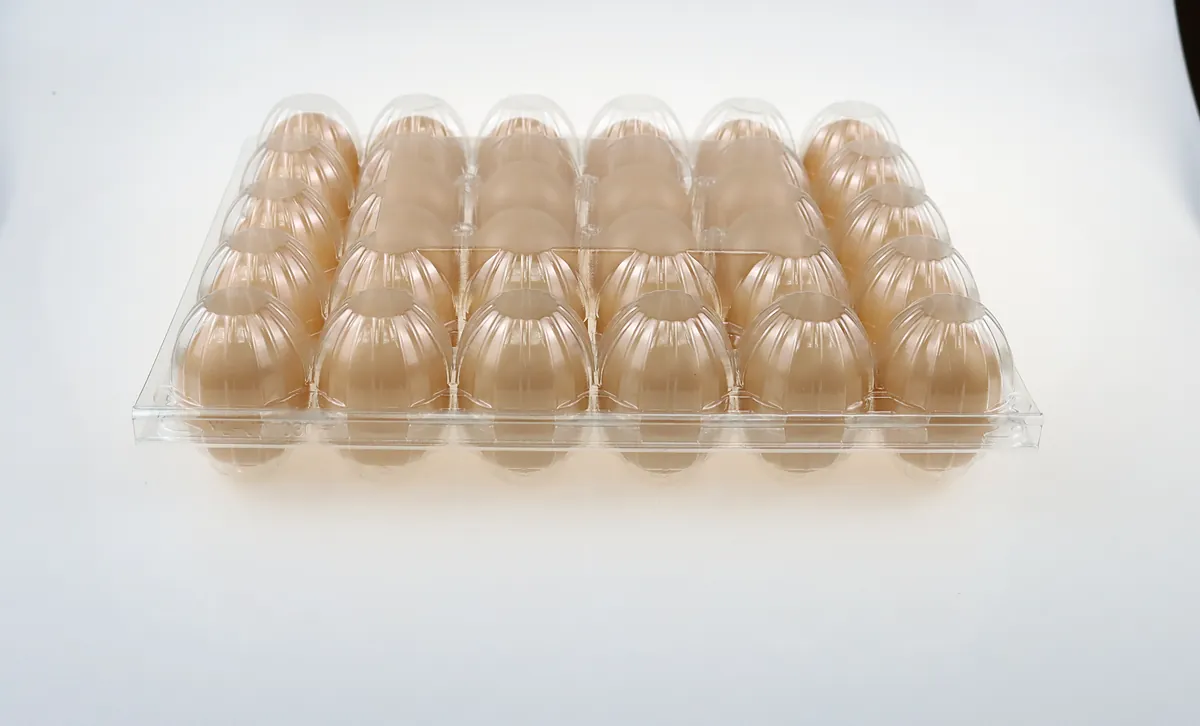
Yinling’s current catalogue includes several count directions. The examples below are useful for an initial screen; final suitability depends on the eggs, material, closure and packing method approved for the order.
| Format | Reference | External size | Catalogue case quantity | First buyer check |
|---|---|---|---|---|
| 6-count | YL-JD-006 | 145 × 99 × 60 mm | 1,200 pieces | Egg diameter and latch closure |
| 10-count | YL-JD-010 | 232 × 99 × 60 mm | 800 pieces | Long-pack stiffness and shelf width |
| 12-count | 12-cavity format | 205 × 155 × 60 mm | 600 pieces | Dozen layout, lid clearance and label |
| 30-count | YL-30G | 285 × 240 × 60 mm | 200 pieces | Loaded layers and carton system |
Dimensions and catalogue packing figures should be reconfirmed on the quotation and approved drawing. Do not compare case quantities without also comparing carton size and shipping terms.
A sample that looks correct on a desk can still fail when it reaches the packing line or transport stack.
Operators should place the real egg range into cells without shell contact, excessive pressure or slow manual correction.
Close filled packs repeatedly and check hinge alignment, engagement and lid clearance across the batch.
Set pack direction, count per layer, layers per case, dividers if used, and the clearance inside the outer carton.
Condition, stack and handle packed samples in the actual carton before releasing a bulk order.
Plastic egg trays occupy volume before they reach the egg packer. Nesting behavior, case dimensions and order terms can materially change the delivered result.
Empty packaging freight covers nested trays moving from the packaging factory to the egg packer. Filled-pack distribution covers closed or loaded trays inside cases after eggs are packed.
Both matter, but they should not be mixed into one “cost per tray” comparison. Align format, material, unit basis, case quantity, carton volume and trade term first.
A controlled approval file makes repeat orders clearer for the buyer, factory and inspection team.
Keep the approved sample, drawing, material identification, packing method and inspection points under one revision. Use the food packaging quality-control checklist to plan receiving and pre-shipment checks.
If an existing format does not fit, align the development steps through the custom packaging process before committing to artwork or delivery timing.
Use these adjacent checks when comparing quotations and planning approval.
Share representative egg measurements, target count, pack role, label area, carton requirement, destination and expected quantity. Yinling can help shortlist an existing format and arrange sample review before custom development is considered.
Standard MOQ is generally 500 cartons. Timing depends on the selected format, material, quantity, tooling and approval route. Early quotations are commonly discussed on an EXW or FOB basis.