
Yinling Packaging Insights · Packing-house operations
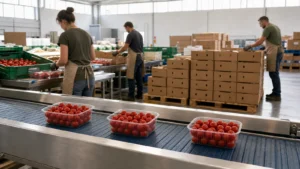
For a fruit packing house, the right produce pack is not selected from a product photo alone. It must work with the crop, target fill, packing method, cooling route, outer carton and seasonal order plan as one operating system.
Start with the packing operation
A standard pack can be a good starting point, but approval should begin with the operation that will use it. The same clamshell or tray may behave differently when crop size changes, a filler feeds it differently, or the case count alters support around the pack.
Grade
Record the variety and realistic seasonal size range, not one ideal sample.
Fill
Check presentation, target weight, headspace and packing speed with actual produce.
Close
Confirm lid, film or bag handling after filling—manually and on equipment if used.
Cool
Review vents and carton openings as a connected airflow path for the intended route.
Case
Test the final count, orientation, stacking and movement in the actual outer carton.
Match the format to the job on the line
The format-selection question is covered in our broader fresh produce packaging guide. For packing houses, the extra question is how each format enters, moves through and leaves the packing area.
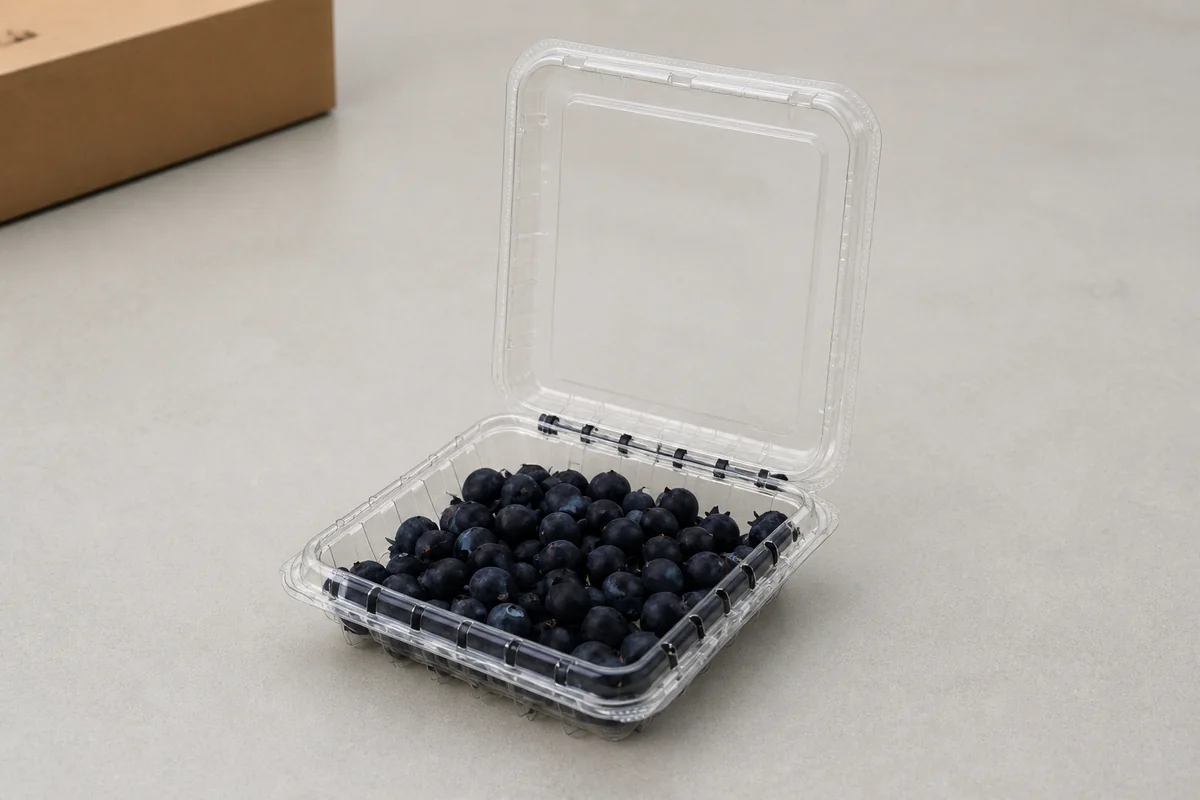
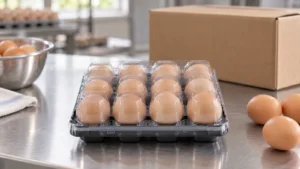
PET clamshells
Useful when a one-piece hinged pack, product visibility and an integrated closure suit the retail program.
- Review de-nesting and consistent opening
- Test hinge and closure after chilling
- Confirm vent and label locations
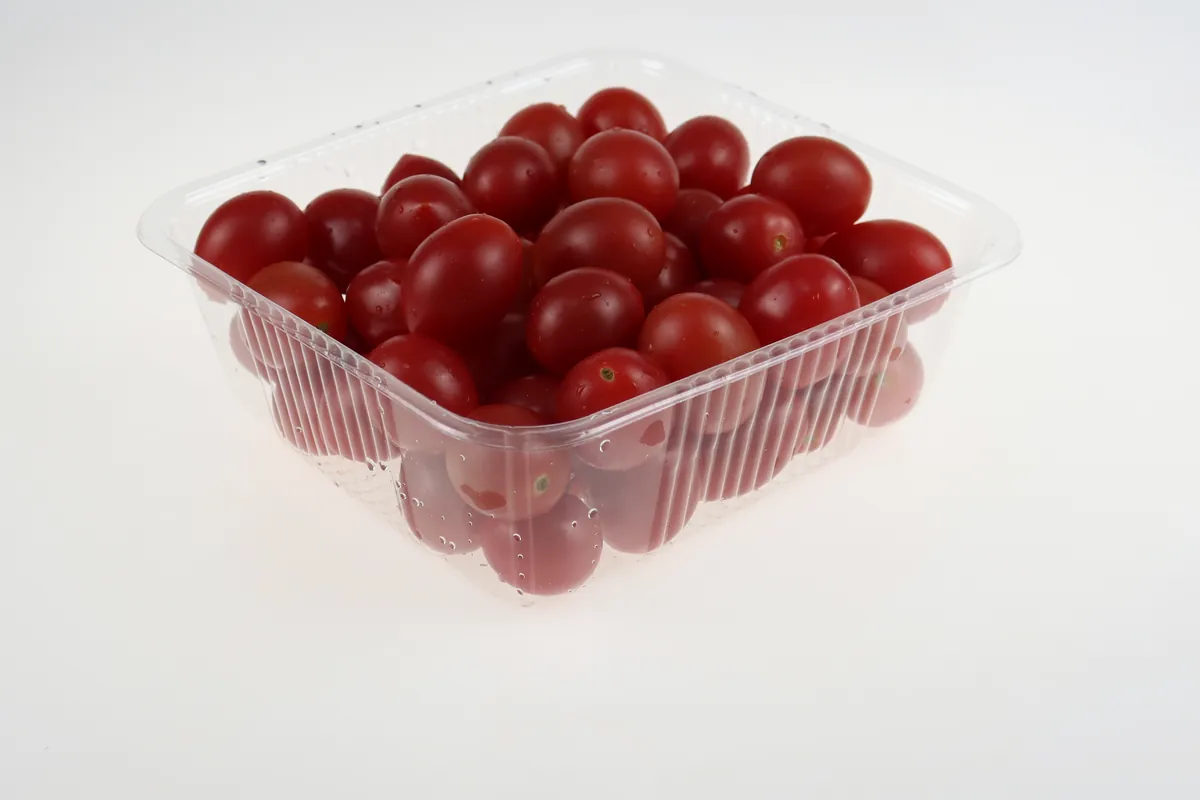
Produce trays
Useful where a shallow footprint, product arrangement or a separate lidding method is preferred.
- Specify film, overwrap or lid separately
- Review tray feed and nesting stack
- Test the complete sealed pack
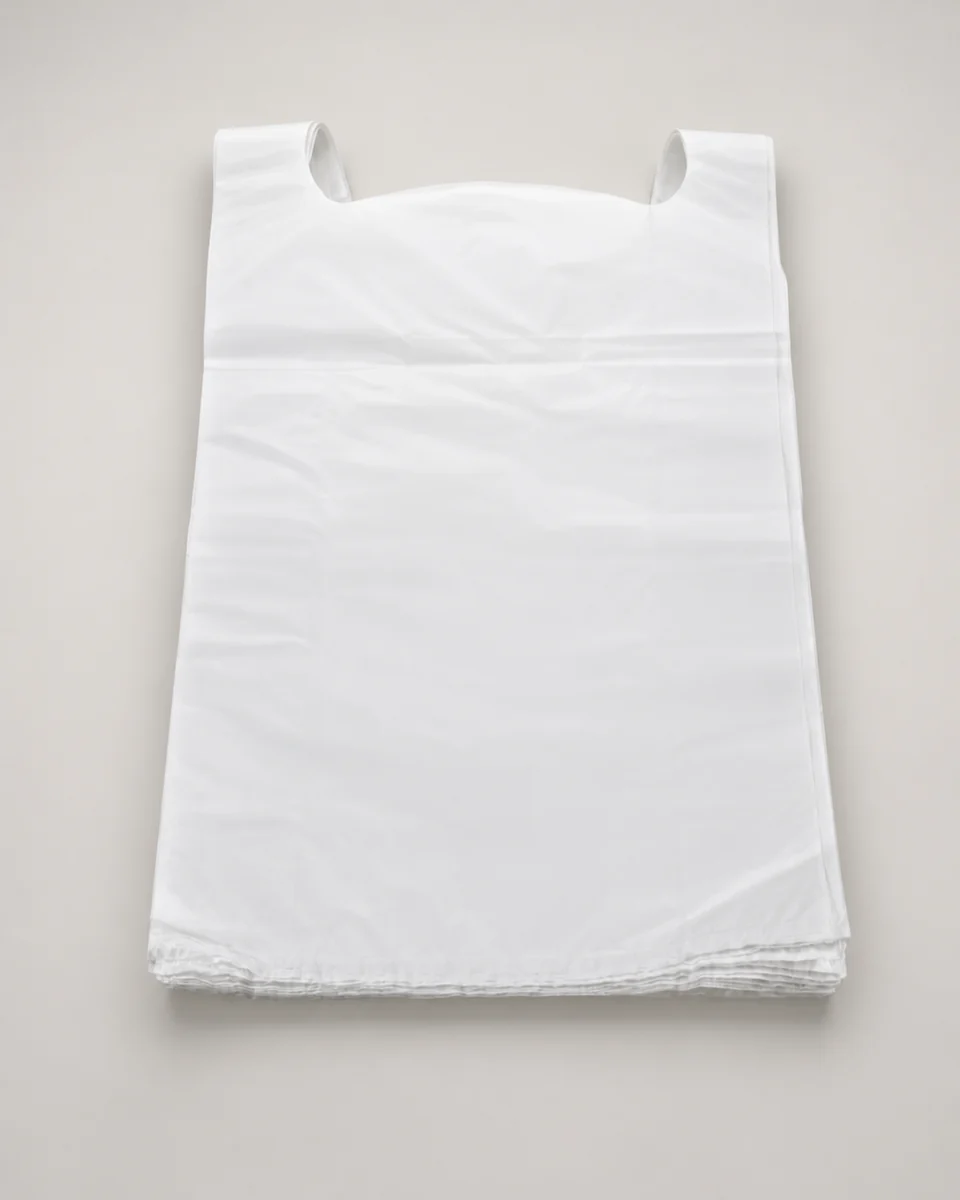
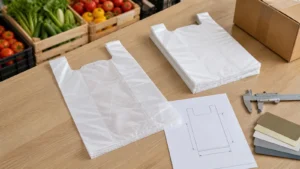
Flexible bags
Useful for selected produce programs where pack flexibility, print or a simple closing method fits the channel.
- Define bag dimensions and material
- Confirm ventilation and closure method
- Test print and packed appearance if branded
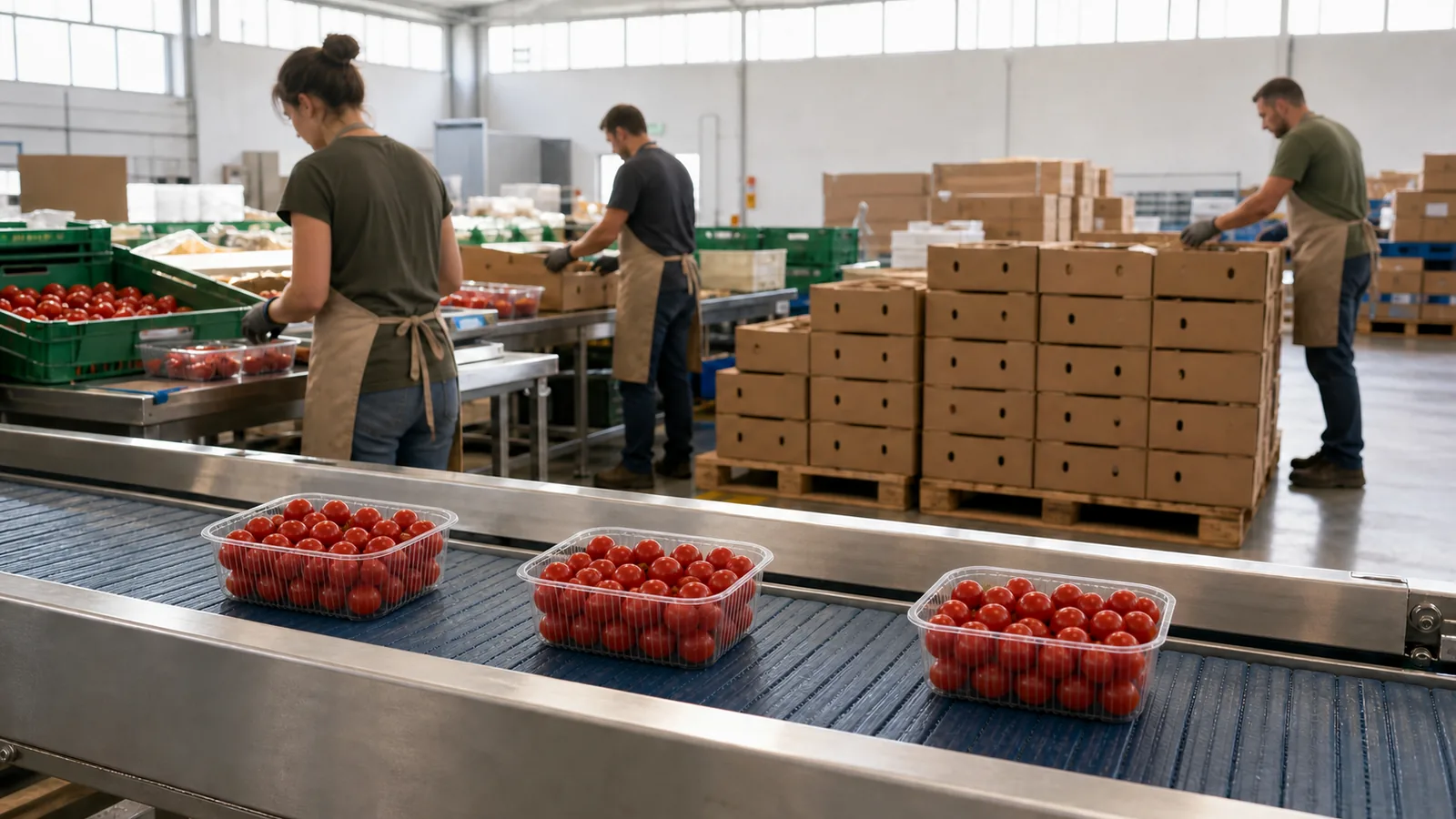
Treat the pack and carton as one system
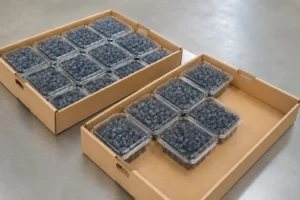
Approving a retail unit without its outer carton leaves an important part of the result untested. Case dimensions affect pack orientation, support, empty space and freight use; carton openings can also interact with the airflow path.
Carton-fit review
Place the exact filled samples in the intended pattern. Check whether packs sit level, whether lids carry unintended load and whether movement develops at the sides or top.
For general packing-house design and precooling context, see the FAO’s packing-house operations guidance. It is a technical reference; the final packaging test conditions must be agreed for the actual project.
Plan seasonal demand before the peak
Fruit programs rarely consume packaging at a perfectly even rate. Crop windows, pack-size changes and destination programs can create short demand peaks. A procurement plan should therefore separate qualification work from repeat-order supply.
Map the program
Forecast crops, pack formats, weekly peaks, destination programs and warehouse limits.
Approve samples
Run actual produce, closure, label, cooling-route and carton-fit checks.
Confirm the spec
Freeze dimensions, material, packing quantity, artwork and inspection requirements.
Control reorders
Track consumption and communicate forecast changes before stock reaches the reorder point.
For standard thermoformed packaging, Yinling’s usual starting MOQ is 500 cartons. The total quantity should still be checked against carton quantity, storage capacity and the seasonal drawdown plan. Lead time is confirmed for the approved specification because tooling, materials, production scheduling and order volume can change the timeline.
Approve filled packs, not isolated empty samples
An empty sample can confirm dimensions and basic handling. It cannot by itself validate fill appearance, product pressure, chilling behavior, case support or line interaction. The approval set should represent the real operating range.
Send with the RFQ
- Produce type, variety and seasonal size range
- Target net weight or count and headspace
- Current pack, drawing or target footprint
- Closing, labeling and packing-line method
- Carton inside dimensions and intended count
- Weekly peak, annual estimate and destination
Check before mass production
- De-nesting, opening and feeding behavior
- Filled appearance and closure consistency
- Vent, label and barcode positions
- Chilled handling under agreed conditions
- Actual carton loading and stacking
- Approved sample, specification and packing mark
Prepare a comparable packaging review
Bring the crop, line and carton data into one brief.
Yinling can review existing catalog formats or a custom development direction against the information supplied. Final material, documentation, MOQ and lead time are confirmed for the approved specification and destination requirements.