
SKU, packed weight, shelf position, label and replenishment method.
Primary pack, carton, back-room handling and chilled display work together.
Test the intended produce and retail routine before a bulk order.
The procurement question
Specify the job before choosing the pack
Supermarket produce packaging is not selected only for shelf appearance. It must fit the produce, packing operation, master carton, receiving routine, display equipment and shopper handling.
A clear clamshell may suit a delicate retail unit that needs containment and visibility. A tray can provide an orderly base when the closure is specified separately. A flexible produce bag can suit products that do not need the same rigid perimeter and may reduce empty-pack storage volume. The correct choice depends on the complete program.
This guide is for retail buyers, produce brands, growers, packing houses, importers and packaging distributors preparing a supermarket supply brief. For a first comparison of the three formats, begin with the fresh produce packaging selection guide.
Record the smallest and largest expected product, not only one sample.
Define how the unit will be sold and what must remain visible.
State whether the pack arrives retail-ready or is prepared closer to the store.
Share the intended label zone, case dimensions and display orientation.
Format selection
Match each format to a retail task
No format is automatically superior. Compare it against the same filled-pack brief so the decision is based on retail work rather than an empty sample.
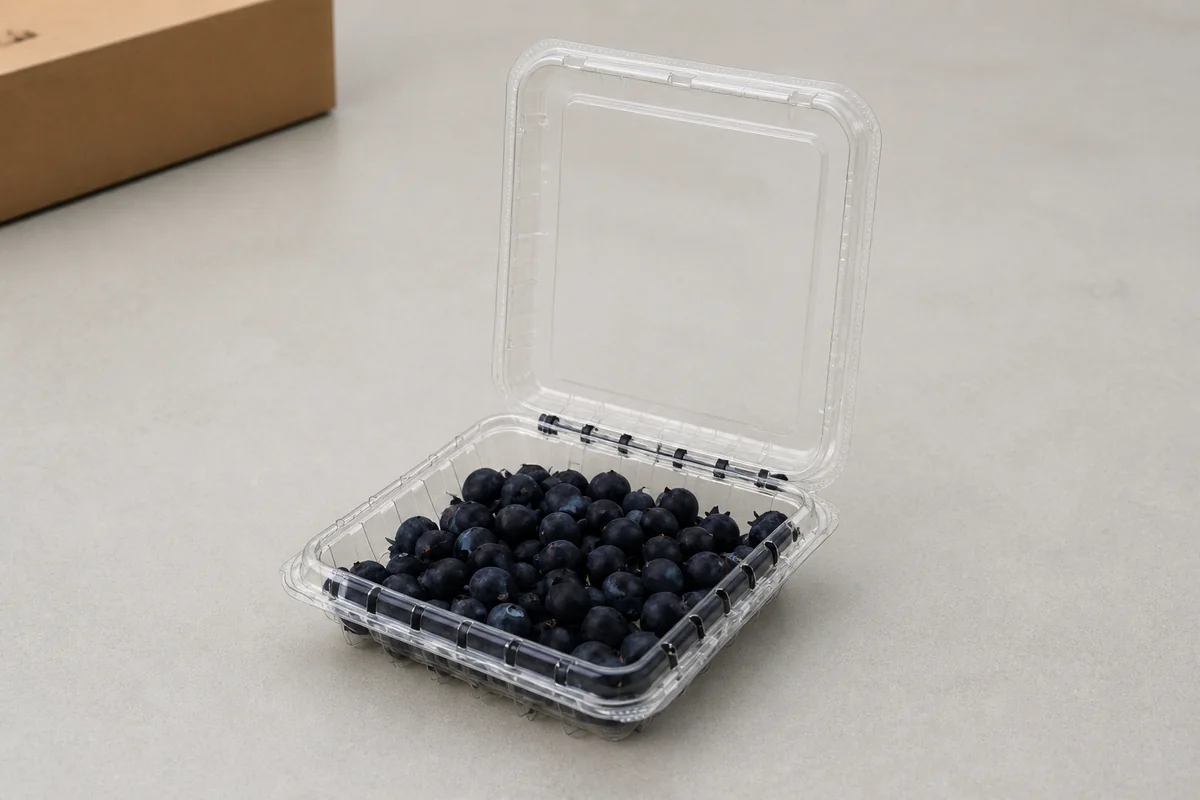
Rigid containment
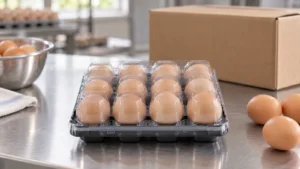
Clamshell
Consider a clamshell when the unit needs an integrated closure, a rigid perimeter and a clear product view. Filled samples should be checked for closure engagement, headspace, vent alignment, stacking and label placement.
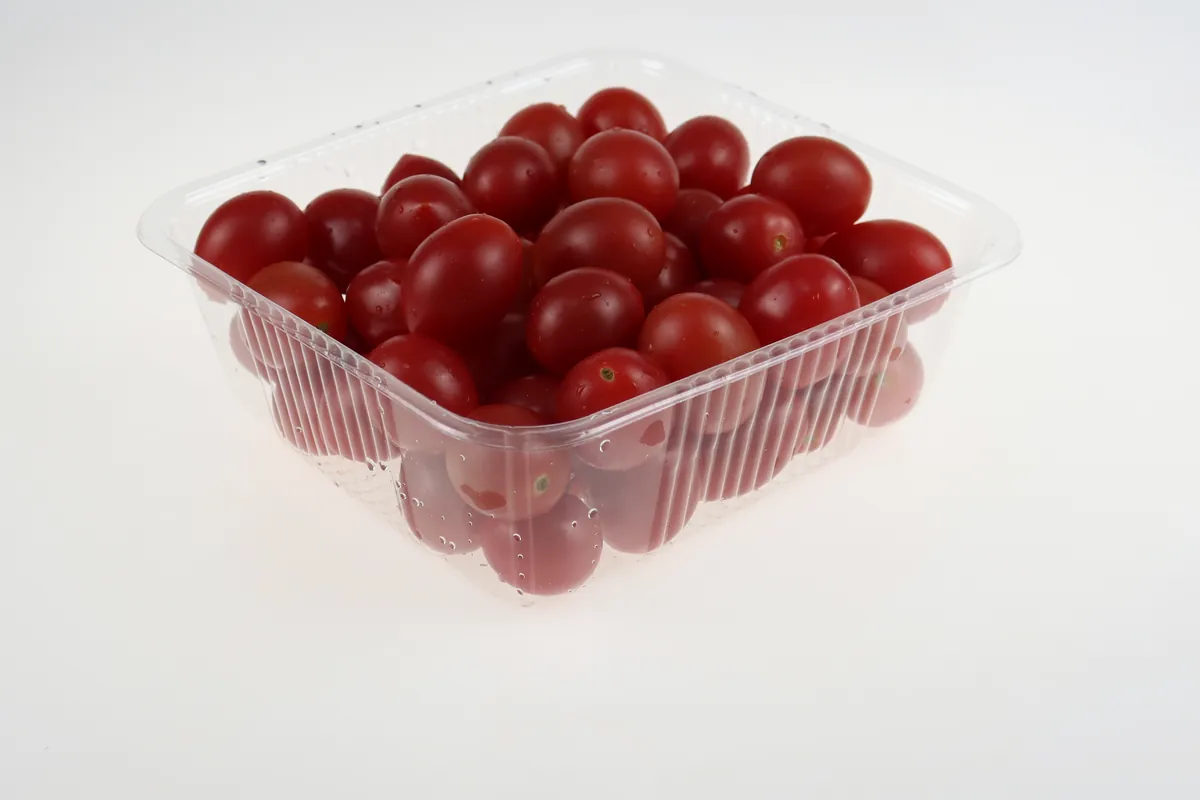
Base and presentation
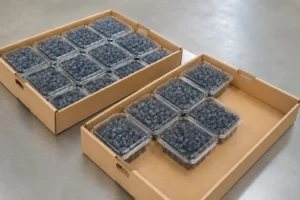
Produce tray
A tray can create a defined footprint for grouped produce. Specify whether it will remain open, use overwrap or use another closure, because the complete system affects handling, label area and carton fit.
Flexible unit
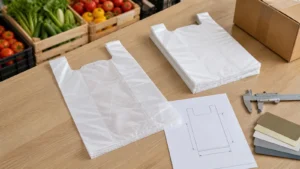
Produce bag
A bag may suit leafy produce, herbs or other products that do not need rigid protection. Film, dimensions, closure, vents, print, packing method and destination documentation must be reviewed together.
Retail journey
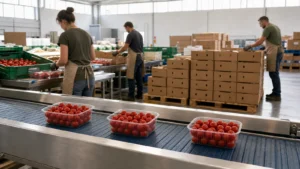
Check the pack from packing line to shelf
FAO guidance treats packaging as a coordinated system for handling, transport, storage and retail presentation. A package that looks acceptable on a desk can still create problems elsewhere in that journey.
Confirm filling direction, closure or overwrap, weight control and label application.
Check count, orientation, unused space, pressure points and ventilation path.
Review case opening, unit removal and back-room stacking with the intended carton.
Make sure staff can move units quickly without closures opening or packs catching.
Check shelf footprint, facing, label visibility, scan position and shopper handling.
Cooling and airflow must also be reviewed as a connected path through the retail pack and carton. Vent quantity alone does not establish cooling performance; position, carton openings, stacking and produce loading all matter. Any performance target should be validated under the buyer’s actual conditions rather than presented as a universal result.
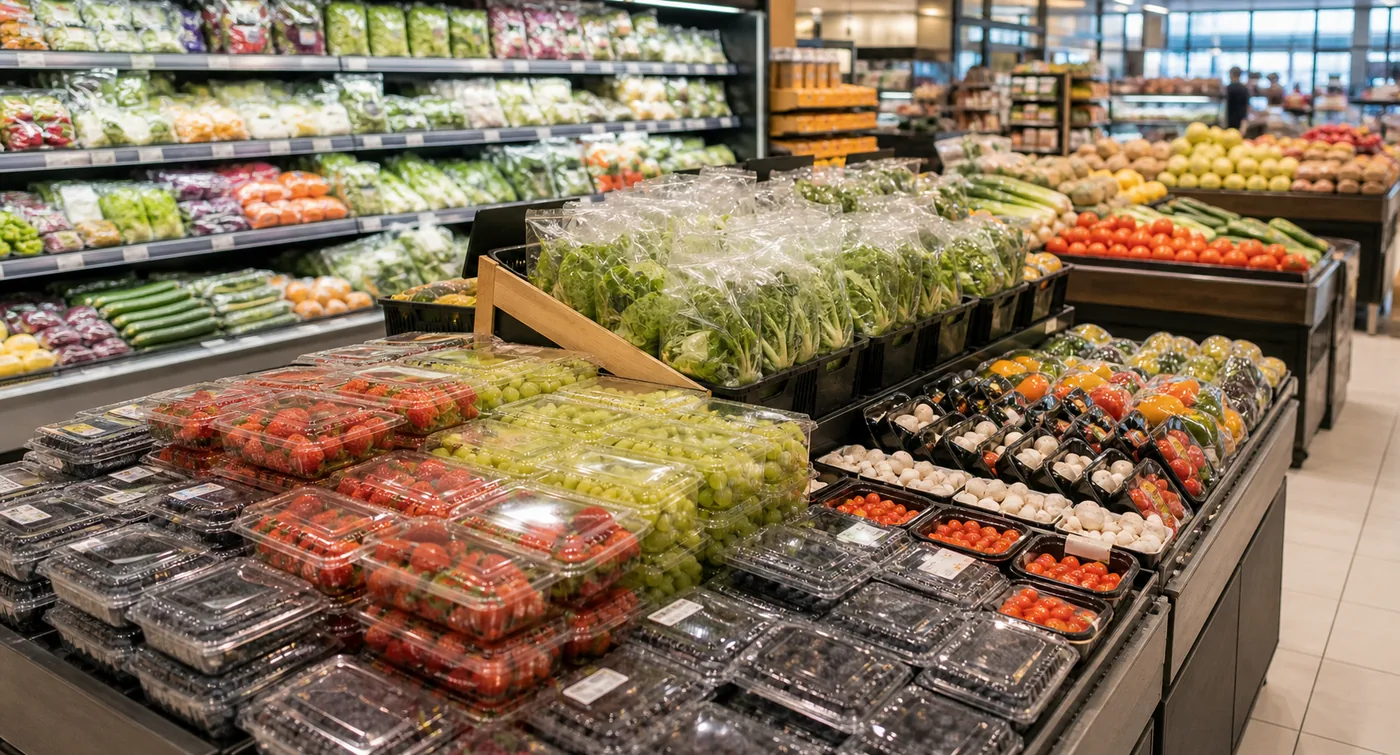
Sample approval
Approve a filled retail unit, not an empty photo
FAO retail-packaging guidance recommends selecting film and package details for the commodity and testing them at small scale. For a supermarket program, approval should reproduce the decisions that staff and shoppers will encounter.
- 01
Fit and closure
Use the seasonal size range and intended fill weight; check headspace, hinge, rim, closure or overwrap.
- 02
Label and visibility
Place the real label or a dimensionally accurate dummy and confirm scanning without hiding too much product.
- 03
Carton and receiving
Pack the planned case count, then review removal, unit pressure, orientation and unused space.
- 04
Display and handling
Recreate the shelf direction, stack height, replenishment motion and normal shopper pickup.
- 05
Approval standard
Record acceptable dimensions, appearance and functional checks before mass production.
Comparable RFQ
Send one complete supermarket packaging brief
Include produce and seasonal size, net weight or count, target format, material request, pack dimensions, vent or closure requirement, label zone, packing method, carton dimensions and count, annual estimate, destination market and required documents.
For Yinling’s standard thermoformed range, the usual starting MOQ is 500 cartons. Plastic-bag MOQ depends on size, thickness, material, print and packing method. Final lead time follows the approved specification and production schedule; EXW and FOB are common starting terms.