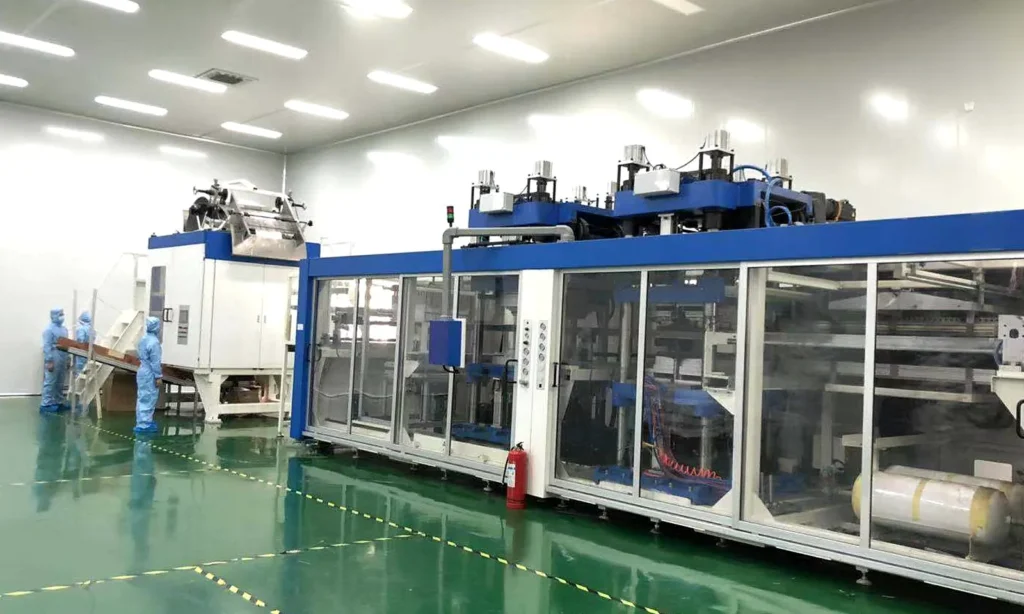
Material identity, thickness and surface condition shape the forming result.
Heat, mold geometry, cooling and cutting determine fit and repeatability.
Test closure, nesting, carton fit and actual food use before production release.
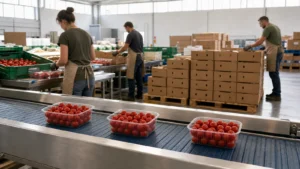
The thermoforming process for food packaging heats a controlled plastic sheet, forms it against a mold, cools the shape, trims individual containers, and then inspects and packs them. For a bulk buyer, the important question is not simply whether a factory owns a thermoforming machine. It is whether the material, tool, process settings, trimming and final packing stay aligned with the approved sample.
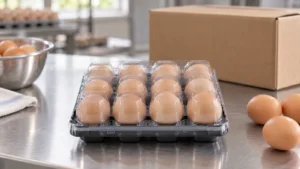
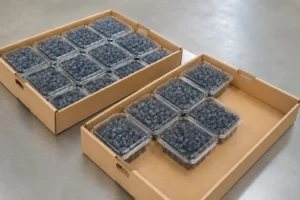
This process is widely used for clear produce clamshells, fruit and vegetable trays, bakery packs, egg trays and other rigid or semi-rigid food containers. Similar-looking packs can behave differently when the sheet, draw depth, rim, hinge, closure or nesting pitch changes, so a useful factory review follows the entire production path.
Sheet-to-container process
Six linked stages convert a flat thermoplastic sheet into packed containers. A change at one stage can appear as a defect later.
Stages 01–03
Sheet preparation, heating and forming
The run begins with the material and sheet specification approved for the application. PET and PP are both used in thermoformed food packaging, but they are not interchangeable defaults. The packed product, temperature route, desired visibility, stiffness, closure and destination requirements should drive the selection. For a practical comparison, see PET vs PP food containers.
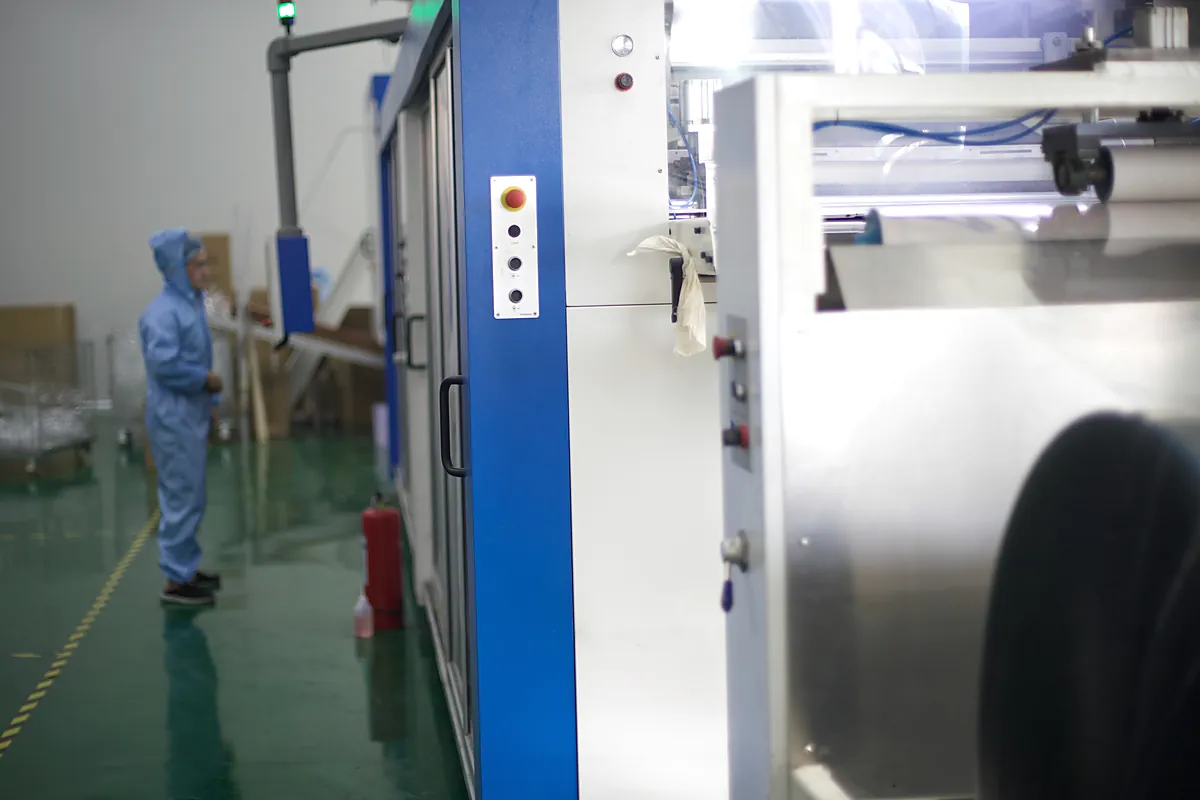
The sheet moves through a heating zone until it becomes formable. Vacuum, pressure, mechanical assistance or a combination then draws the sheet into the tool. Container depth and geometry redistribute material, which is why nominal sheet thickness alone does not prove the strength of a finished corner, rim or hinge.
Buyer checkpoint: approve material identification, critical dimensions and finished-pack performance together—not only a resin name or a target unit weight.
Stages 04–05
Cooling and trimming protect dimensional fit
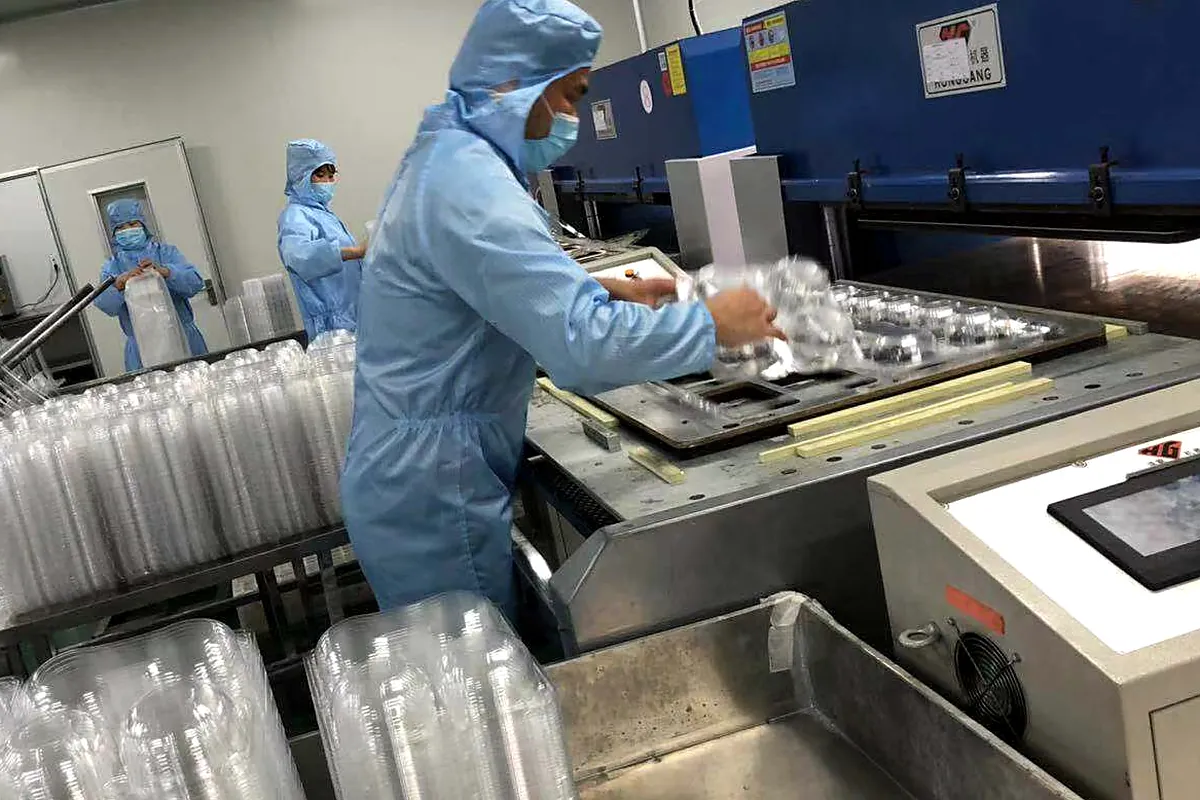
After forming, the container must cool enough to retain its intended shape before release. Insufficient stabilization can show up as distortion, rim movement or inconsistent nesting. The formed web is then cut into individual containers or connected pack formats.
Trim position matters to more than appearance. It affects external dimensions, edge quality, lid-to-base alignment, hinge movement, closure engagement and the way units feed or separate on a packing line. For a clamshell, a good cavity with an unstable rim or latch is still an unusable pack.
Stage 06
Inspection should mirror the buyer’s application
Visual checks can identify contamination, incomplete forming, rough edges and obvious deformation, but appearance is only the first level. A purchasing specification should identify which dimensions, weights, closure features, stack behavior and packing details are critical to use.
Yinling’s documented quality practices include incoming inspection, batch and finished-goods checks, retention samples, traceability records, nonconforming-product isolation and corrective action. The exact inspection plan should still be agreed for each item. The separate food packaging quality-control checklist explains what evidence buyers can request before shipment.
Supplier evaluation
What evidence should a bulk buyer request?
A useful supplier review connects process control to the pack’s actual job. The following evidence is more informative than a generic machine list.
For a new item, test samples with the actual food, fill weight, label, lid or closure, carton, storage route and handling conditions. For a repeat item, confirm that the previously approved material, tooling and specification remain current. The packaging manufacturer verification article provides a broader factory-audit framework.
Bring the application, not only a container photo
Share the food or produce type, fill weight, dimensions, material preference, temperature route, closure need, label, carton, destination and annual volume. Yinling can then review a catalog starting point or a custom thermoformed route.
Yinling’s standard MOQ for confirmed thermoformed packaging programs is generally 500 cartons. Final MOQ, sampling and lead time depend on the selected format, material, tooling status, quantity, packing method and production schedule. EXW and FOB are usual starting terms.
Technical references