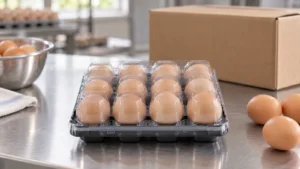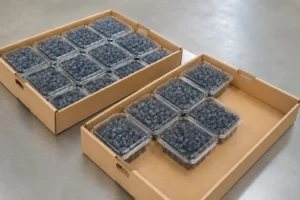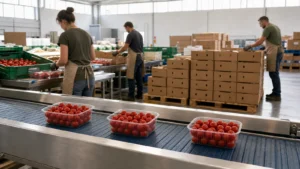
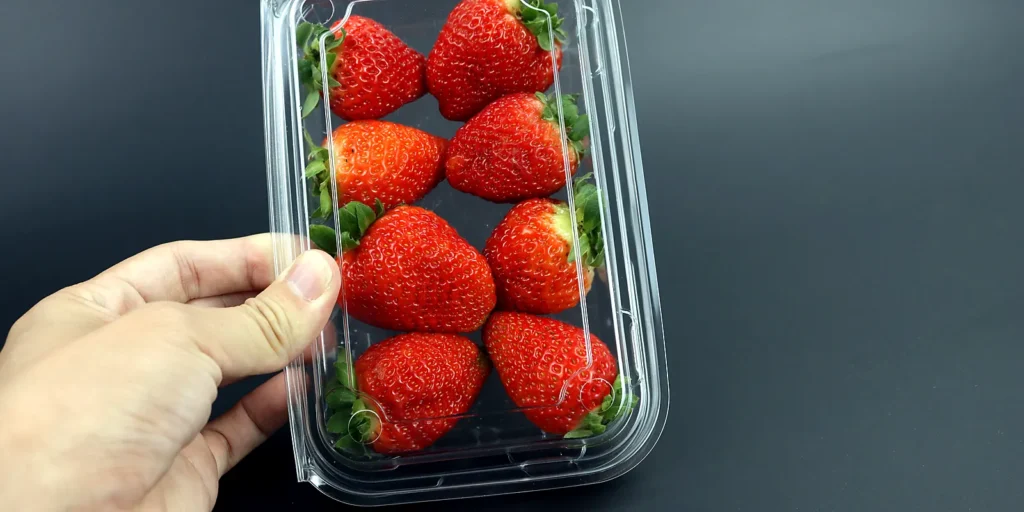
A PET clamshell is a one-piece thermoformed container with a base and lid connected by an integrated hinge.
The two halves fold together and usually engage through formed locks or tabs around the rim. In food packaging, clear PET clamshells are commonly considered when product visibility, a rigid shape and an attached lid are useful. The name describes the package structure; it does not guarantee that every clamshell will suit every food, filling temperature or distribution route.
This introduction explains the format itself. Buyers who already know they need a fruit pack can move to the more detailed PET fruit clamshell buyer’s guide for size, vent and carton decisions.
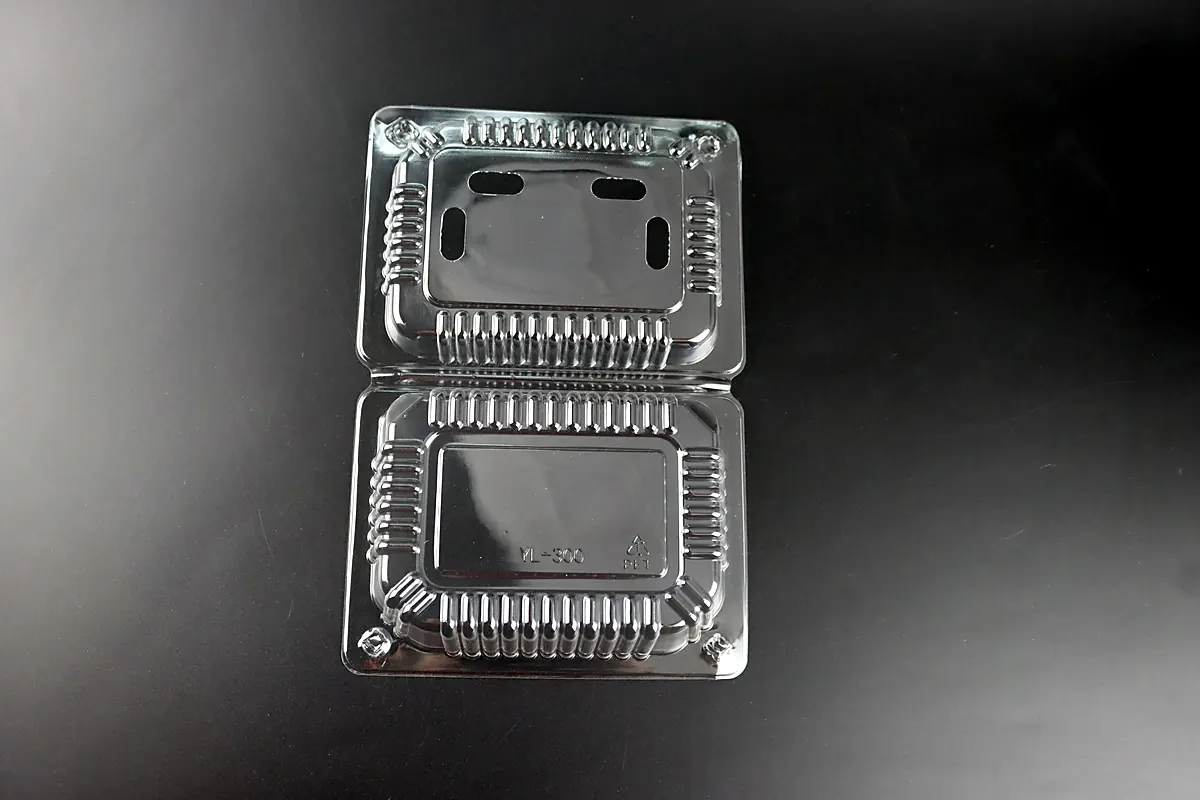
Anatomy of PET clamshell packaging
A clamshell may look like one simple piece, but each formed area has a different job. Review those jobs before comparing only outside dimensions.
12345
What PET contributes—and what the design must still solve
PET is often selected for clear rigid food packs because it can provide good optical clarity and stiffness. Those material traits make the contents and formed geometry easy to see, but buyers still need to approve the complete package.
PET material contributes
- Clear presentation of the packed product
- Stiffness for a lightweight formed container
- A surface that can be formed into repeatable cavities, ribs and rims
Package design determines
- Usable volume, headspace and product contact
- How the hinge folds and the locks engage
- Vent position, label space and stacking behavior
- How units fit and carry load inside the master carton
When is a PET clamshell a good fit?
Consider the format when
- Retail visibility is part of the product presentation.
- An attached lid can simplify filling and closing.
- The product benefits from a rigid outer shape during display and handling.
- Produce airflow or drainage can be designed into the pack and carton together.
- Filled samples can be tested through the intended cold chain and distribution route.
Pause and compare alternatives when
- The product will be hot-filled, reheated or exposed to temperatures not validated for the chosen specification.
- The pack must contain free liquid and leakage control is critical.
- Frequent repeated opening or a highly flexible hinge is central to use.
- An opaque presentation, separate lidding film or another barrier system is required.
- Destination-market food-contact or labeling documentation has not been confirmed.
For temperature-led material selection, compare PET and PP food containers before deciding the package format.
Ask four questions about the packed system
Does the product fit without harmful contact?
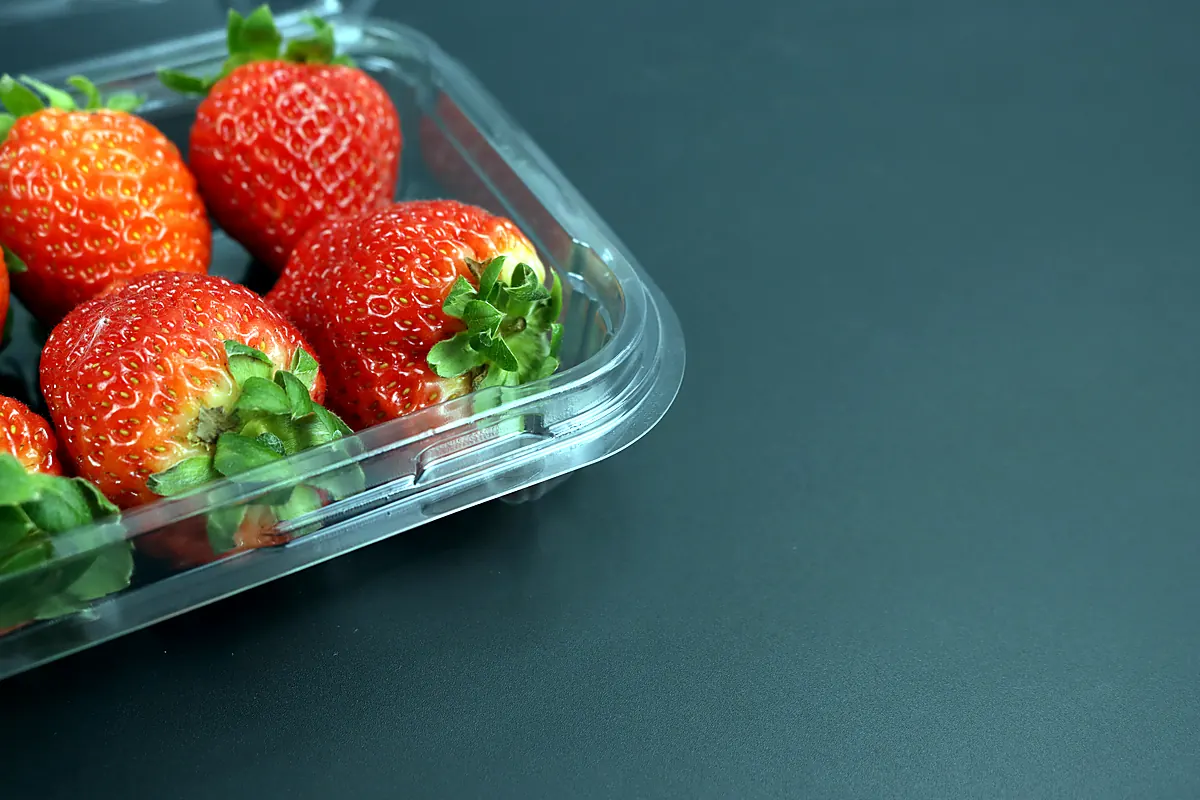
Confirm real product dimensions, target net weight and seasonal variation. Check headspace, side clearance and whether the lid presses delicate product.
How will heat and moisture leave the pack?
Map the route through clamshell vents, labels, adjacent packs, carton openings and pallet orientation. Vent count alone is not the answer.
Will the hinge and locks survive handling?
Fill, close, reopen and stack samples. Look for inconsistent lock engagement, rim distortion and accidental opening after normal handling.
Does the case pack work commercially?
Confirm units per carton, orientation, nesting, dividers, carton dimensions and pallet pattern. A low unit price can be offset by poor carton utilization.
Standard format or custom clamshell?
Use an existing format to test the application
This is often the practical first route when a catalog footprint can meet the product, label, line and carton requirements. Buyers can compare filled samples before committing to new tooling.
Change geometry only for a defined reason
A fixed retail footprint, existing carton, special label panel, unusual product shape or packing-line requirement may justify a custom design. Freeze the application brief before discussing tooling.
For Yinling thermoformed packaging programs, the standard MOQ is 500 cartons. The actual model, units per carton, customization scope, lead time and commercial terms are confirmed against the final specification. EXW and FOB are the usual starting terms.
Describe the product and route—not only the container volume
Share the food or produce type, dimensions, target pack weight, filling temperature, cooling method, carton size, destination and forecast volume. Yinling can then compare available formats and identify which details still need sample testing.
Related reading: how to choose fresh produce packaging, blueberry clamshell fit and carton tests, and how thermoformed food containers are made.