Choose packaging around the production route—not a catalog photo
Food manufacturing packaging has to move through filling, closing, handling, storage and dispatch as one controlled system. The useful question is not “Which container looks best?” but “Which format survives this exact route?”
Start where the package enters the line
The same food can need a different pack when it is filled by hand, loaded through a depositor, closed on a bench or moved through a high-throughput line.
Product condition
Record temperature, weight, particle size, oil or moisture and normal batch variation.
Closure route
Define a hinged lock, separate lid, film, wrap or bag seal—and who or what closes it.
Line contact
Check de-nesting, grip points, conveyor movement, label position and operator access.
Storage state
Confirm chilled, ambient or frozen conditions and the intended hold time.
Distribution unit
Build the carton count, stack direction, pallet pattern and delivery route into approval.
Match each packaging task to a starting format
A food manufacturer may use more than one format across work-in-process, retail-ready goods and distribution. These are screening routes, not universal use claims.
TRAY
Stable base and portion layout
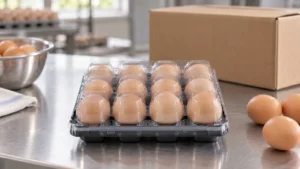
Review trays when the product needs support, count control or a consistent footprint before wrapping, lidding or secondary packing. Confirm the intended closing system separately.
PACK
Visible, retail-ready presentation
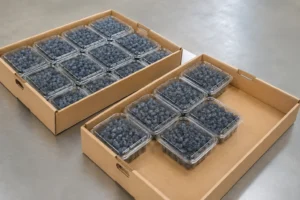
Review clear clamshells or hinged containers when product visibility and one-piece closing matter. Closure engagement, headspace, vents and label area still require filled-pack testing.
BASE
Prepared portions and components
Review a base-and-lid format when the product requires a defined cavity and repeatable closing. Material and structure must be screened against the actual product temperature and route.
BAG
Grouped goods and branded carry
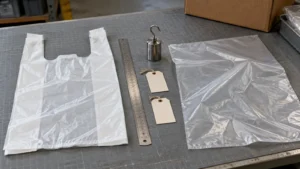
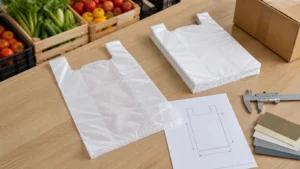
Review bags when flexibility, low empty-pack volume or printed presentation is important. Film, handle, seal, print and load testing belong in one specification.
Follow the package through the real production handoffs
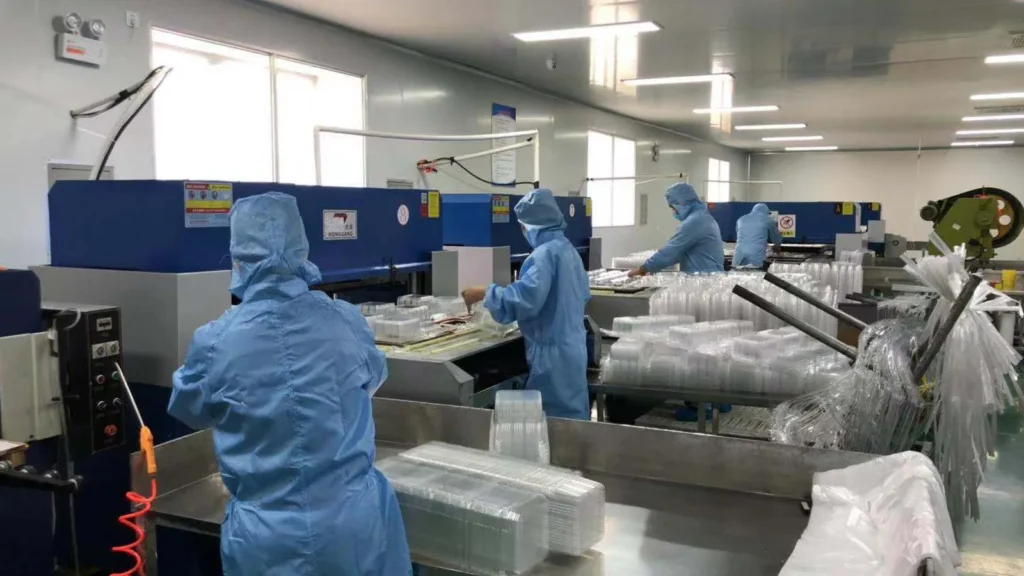
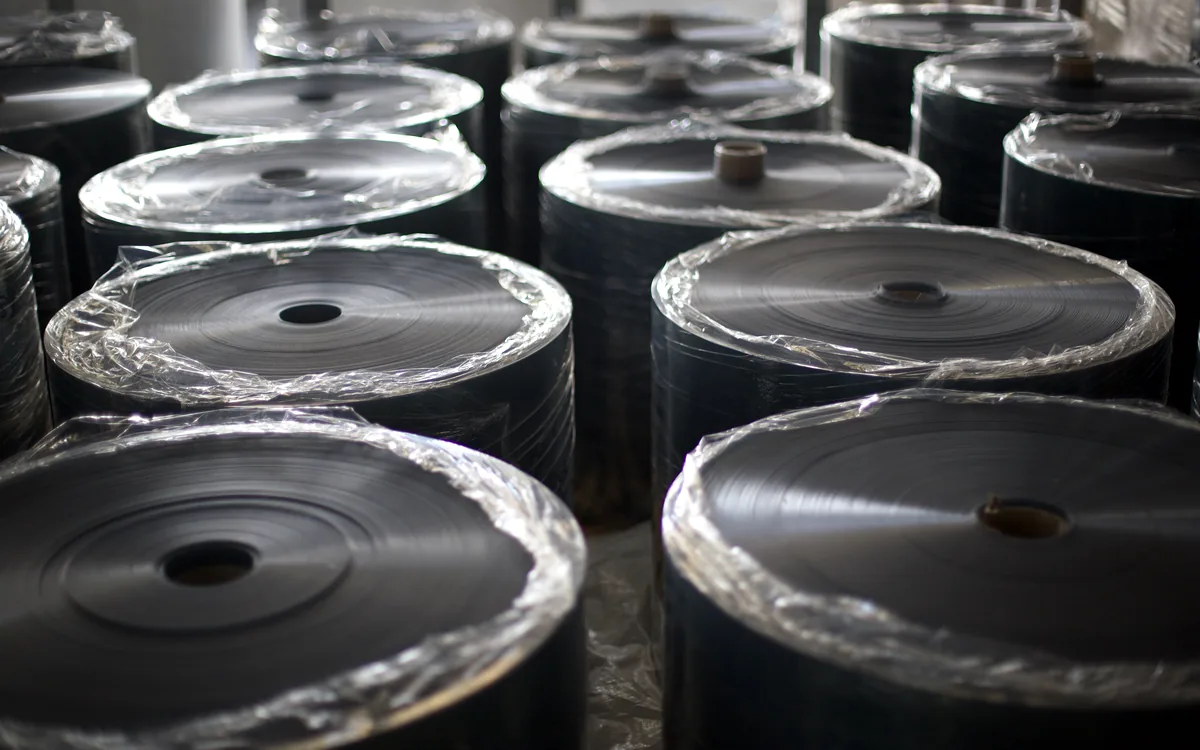
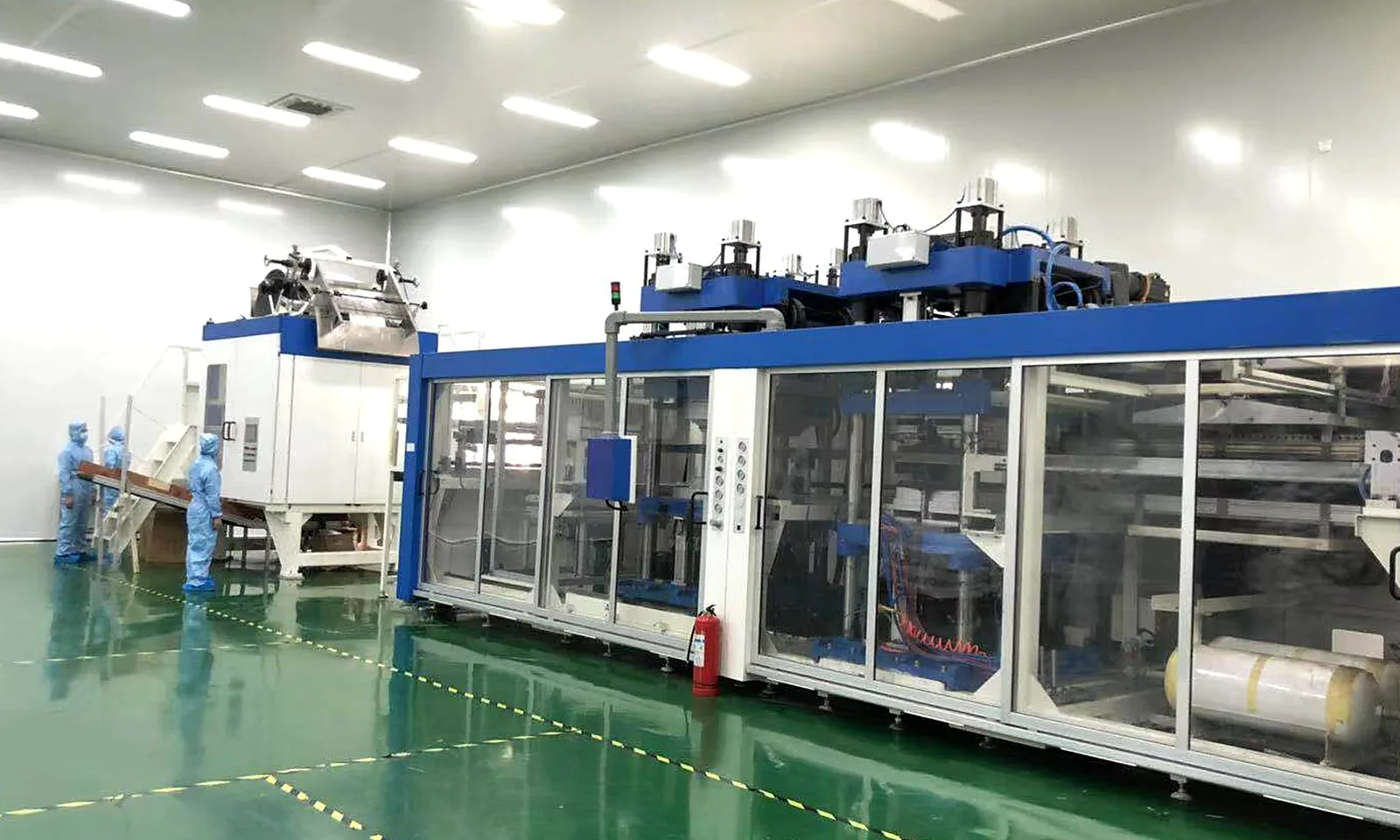
One machine cannot represent the complete manufacturing route. These Yinling workshop views show four connected handoffs—from prepared sheet rolls and thermoforming to finished-container handling and pack-out. Buyers should link the approved specification and inspection evidence across the same sequence.
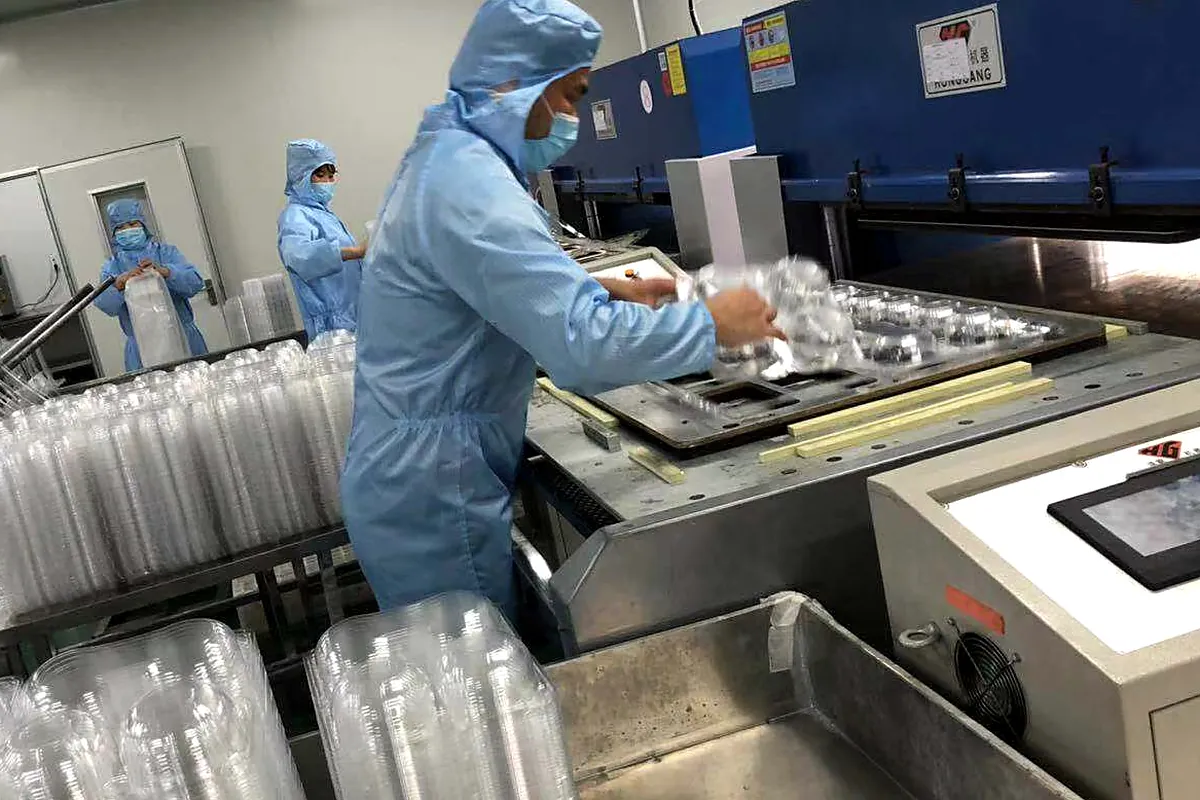
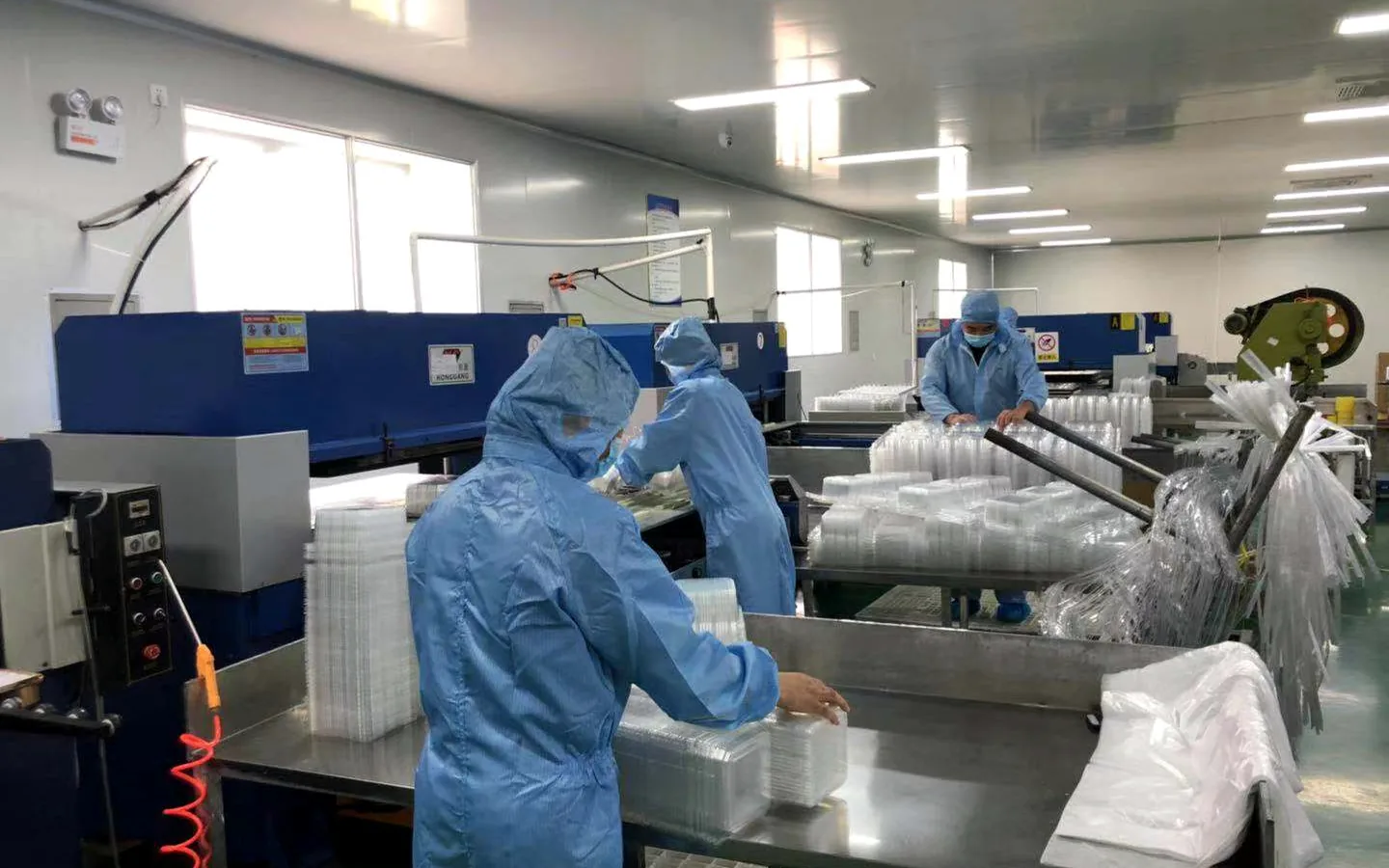
Documentation is destination-specific. State the country, food type and buyer requirements in the inquiry. Do not assume one generic statement or certificate covers every market and application.
Run a filled-pack trial before bulk release
An empty package may look correct but behave differently after filling, closing, stacking and holding. Keep the approval route short and measurable.
Line trial
Check de-nesting, fill access, handling speed, closure effort and operator consistency.
Filled-pack review
Inspect fit, headspace, rim cleanliness, closure, movement, fogging and appearance.
Carton trial
Load the planned count and stack. Check compression, orientation and package movement.
Route review
Repeat the intended storage and transport conditions, then inspect at the agreed end point.
Record the approved product code or drawing, packaging components, label, carton and acceptance checks together. Yinling’s food packaging quality-control checklist provides a practical evidence framework.
Send one production brief to every supplier
Comparable quotations require the same food, process and logistics inputs—not just a target unit price.
Include in the inquiry
- Food type, portion weight and maximum product dimensions
- Temperature and condition at the moment of packing
- Manual or automated filling and closing steps
- Required tray, clamshell, lid-and-base or bag function
- Storage state, intended hold period and distribution route
- Label, barcode, print or tamper-evidence requirements
- Carton count, stack direction, pallet and destination
- Forecast quantity and required delivery window
- Destination-specific food-contact documents requested by the buyer
Standard or custom?
Begin with an existing format when it can pass the complete route. Move to a custom structure only when a measured gap justifies tooling and approval work.
- Use standard
- Fit, closure, handling and carton results are acceptable without changing geometry.
- Modify
- A defined vent, cavity, height, closure or handling problem cannot be solved within the available range.
- Compare
- Request the same filled-sample and carton evidence for every candidate before price selection.
For custom development, align drawings and sample gates through the custom food packaging process.
Continue from process fit to purchasing control
Use these resources to narrow material, schedule, quality and order requirements.
Send the process—not only the dimensions
Tell Yinling what you pack, its condition at filling, how the package closes, the storage and distribution route, carton requirement, destination and expected quantity. We can review whether an existing tray, clamshell, food container or bag is a practical starting point.
Standard thermoformed MOQ is generally 500 cartons. Timing depends on product selection, material, tooling and approval route. Early quotations are commonly discussed on an EXW or FOB basis.