Match the package to the product risk—not just the dimensions
Bakery packaging has to protect shape, texture and presentation through packing, display and transport. The right format begins with the product’s most likely failure.
Five inputs that narrow bakery packaging choices
A supplier can recommend a useful sample only when the product and route are described beyond length and width.
Protect the top
Measure frosting, fruit, glaze and decoration at the highest point, including normal variation.
Manage moisture
Define whether the product should remain soft, crisp, dry or chilled through the selling period.
Contain grease
Record oil, butter, sugar dusting and sticky toppings that can mark the pack or label area.
Limit movement
Note fragile edges, loose pieces and whether cavities, dividers or a stable base are needed.
Build the journey
Include cooling, packing, shelf display, carton stacking and customer or delivery handling.
Choose the format by what must be controlled
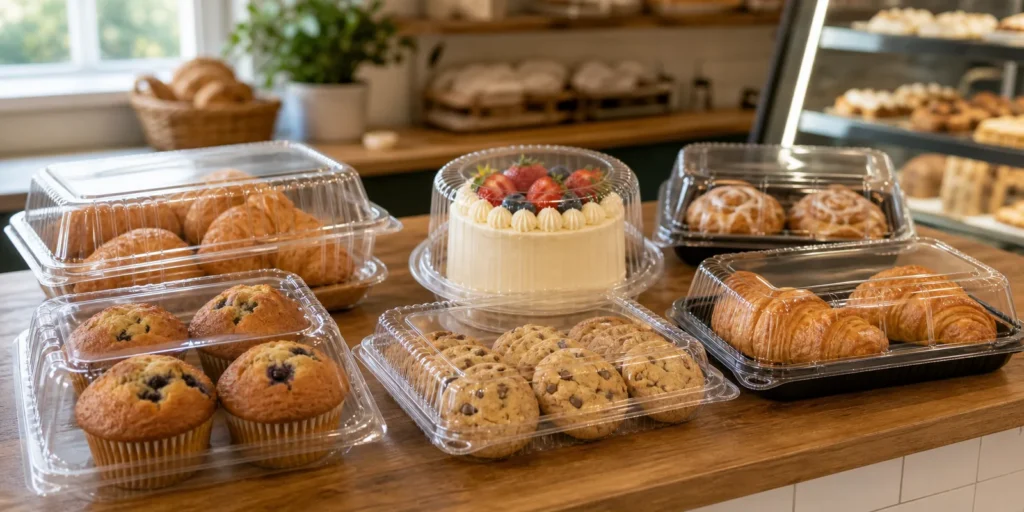
One bakery may need several formats because the risks of a frosted cake, crisp cookie and multipack pastry are not interchangeable.
DELICATE
Cakes and decorated desserts
Prioritize dome height, a stable base, clearance above decoration and a closure that does not twist during handling.
FRAGILE
Tarts, muffins and cupcakes
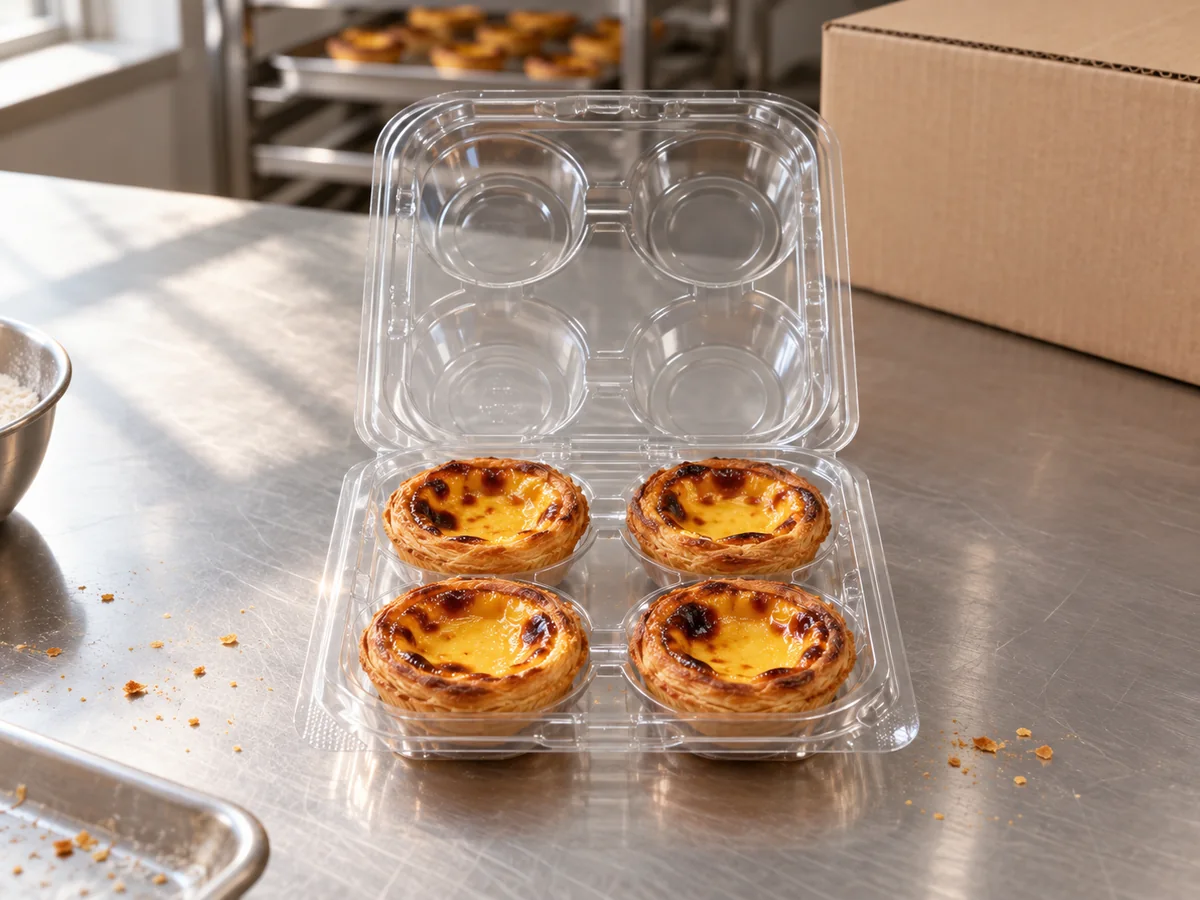
Use cavity fit or dividers to reduce collision. Check whether the customer can remove each piece without crushing the rim.
DRY
Cookies and biscuits
Balance movement protection with the moisture behavior needed for the intended selling period. Avoid assuming a tighter closure always preserves texture.
FILLED
Rolls, slices and pastries
Review base support, oil or filling contact, headspace and whether mixed products transfer moisture or decoration.
Clearance is a controlled dimension
External pack size is only the starting point. The useful space inside the base and lid must match the finished product after baking, cooling and decoration.
Cooling matters: packing a product before it reaches the intended packing condition can change condensation and texture. Validate the real process rather than assigning the result to the container alone.
Test bakery packaging as a filled system
A good-looking empty sample can still fail after it is closed, stacked, transported or stored.
Use the real condition
Pack at the intended product temperature and time after baking.
Use real variation
Include the tallest, widest or most fragile normal product.
Inspect contact
Check lid clearance, rim engagement and opening without product damage.
Build the carton
Use the planned pack count, stack and delivery route.
Review shelf life
Inspect texture, fogging, movement, odor and appearance at the intended end point.
Link the bakery product, container base and lid, label, carton configuration and inspection limits to one sample revision. Yinling’s food packaging quality-control checklist can help structure that evidence.
Make quotations comparable before discussing unit price
Ask each supplier to quote the same controlled requirement, then compare the complete packed result.
Send with the inquiry
- Bakery product type and finished dimensions
- Target count, net weight and decoration height
- Packing condition and intended selling period
- Required clear display and label area
- Closure, cavity, divider or tamper-evidence needs
- Carton count, stack direction and delivery route
- Destination and required food-contact documentation
Standard or custom?
Start with an existing bakery container when the fit and route tests pass. Consider custom tooling only when product geometry, merchandising or carton efficiency creates a measurable gap.
For a custom structure, align drawings, samples and release criteria through the custom food packaging process. Review packaging MOQ before changing dimensions or tooling.
Connect product fit to material and production
Continue the decision with these procurement and quality resources.
Send a finished-product brief
Tell Yinling the baked product, finished dimensions, decoration height, packing condition, display route, carton requirement, destination and expected quantity. We can review whether an existing bakery or food-container format is a reasonable starting point.
Standard thermoformed MOQ is generally 500 cartons. Timing depends on the selected product, material, tooling and approval route. Early quotations are commonly discussed on an EXW or FOB basis.